

Xylene Solvent: Uses, Grades, and Buying Considerations
Xylene is a common liquid solvent used in factories around the world. It is used in paint lines, printing workshops, cleaning work and chemical production every day. Many factory and procurement teams work with xylene regularly, but not all know how to pick the right grade, follow official safety rules, or get the best value from bulk orders. This guide covers all key facts about xylene solvent, including basic properties, grade types, storage rules and bulk buying tips, to help you make clear, cost-effective choices for your work.
Table of Contents
- What Is Xylene Solvent?
- What Grades of Xylene Are Available?
- What Are Its Main Industrial Applications?
- What Global Standards & Safety Rules Apply?
- Key Bulk Buying Considerations
- Safe Storage & Transportation Guidelines
- Conclusion
- FAQ
What Is Xylene Solvent?
Xylene is a clear, colorless liquid solvent used in many factory processes. Its chemical formula is C₈H₁₀, and it also goes by the name dimethylbenzene. Most commercial xylene is a mix of three slightly different chemical forms, called isomers. It also holds a small amount of ethylbenzene.
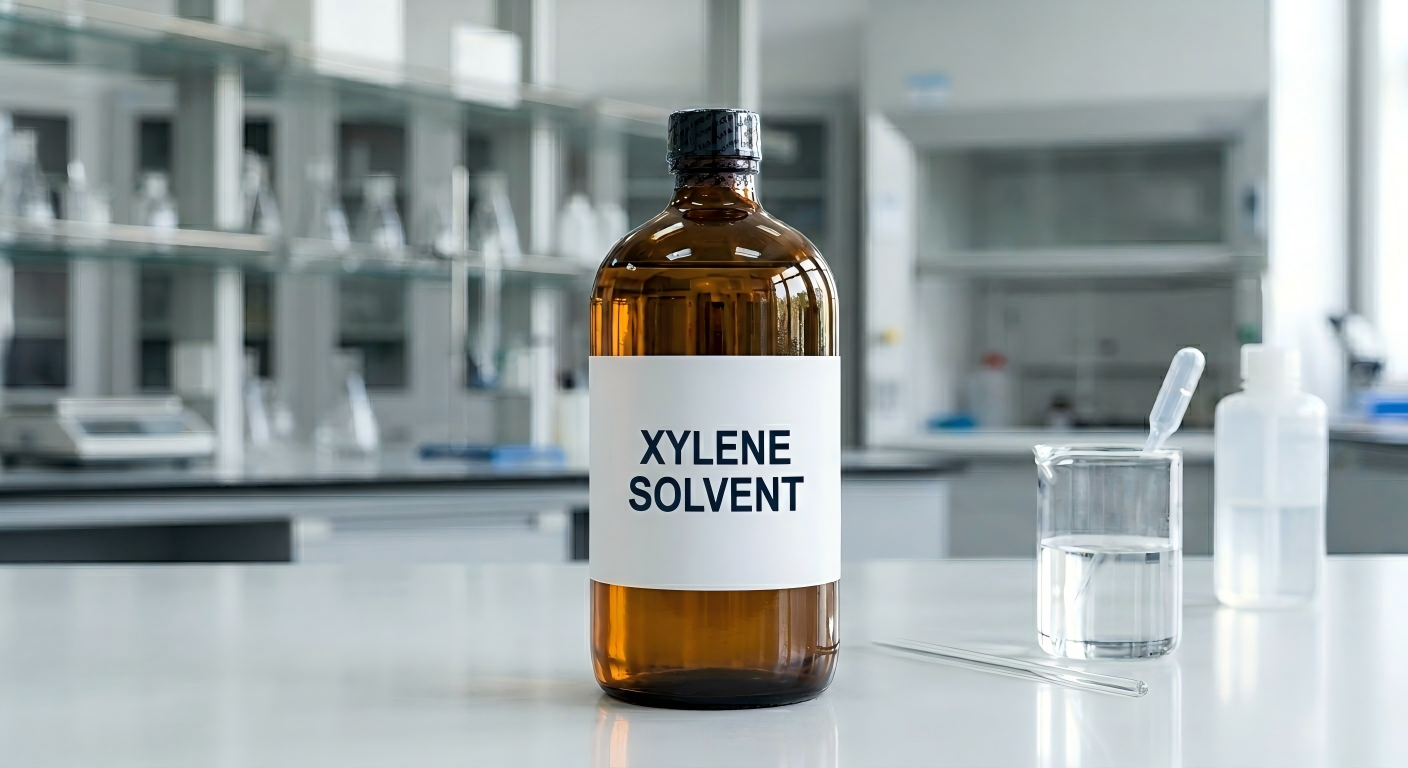
Source: SUMEC Chemical
Research from Green Chemistry — a leading peer-reviewed chemistry journal — calls xylene a trusted standard solvent for industrial work. It has a strong ability to dissolve other materials and dries at a steady pace. It also works well with many resins and plastic materials. Unlike faster-drying light solvents, xylene helps create smooth, even coatings on large production lines. It is a common material for paint, printing, and petrochemical factories around the world.
The Three Xylene Isomers
All three isomers share the same C₈H₁₀ chemical formula. They all have a basic ring-shaped structure made of carbon atoms. They differ only in where two small methyl (CH₃) groups attach to the ring. This small change creates clear differences in boiling point and factory uses:
- Ortho-xylene (o-xylene): The two methyl groups sit next to each other on the ring. It has the highest boiling point of the three. It is most often used to make other chemical products.
- Meta-xylene (m-xylene): This is the most common isomer in standard mixed xylene. It does most of the work of dissolving other materials.
- Para-xylene (p-xylene): The two methyl groups sit opposite each other on the ring. It is the highest-value isomer. It is used mainly to make plastics and fabric fibers.
Data from the International Agency for Research on Cancer (IARC) and standard industry guides list key facts about mixed xylene:
- It boils between 137°C and 144°C
- It has a density of about 0.86–0.87 g/cm³ at room temperature
- It does not mix well with water
Because of its non-polar molecular structure, xylene dissolves many oil-based substances well. These include alkyd resins, acrylics, natural rubber, and bitumen materials.
For most bulk industrial buyers, standard mixed xylene is the default procurement choice. High-purity single-isomer grades need special separation processes. They are only used for specific chemical production. We cover these grades in detail in the next section.
What Grades of Xylene Are Available?
Commercial xylene comes in several different grades. They are sorted by purity, isomer mix, and official industry rules. Picking the right grade helps control production costs. It also makes sure final products meet required quality standards. Most industrial buyers choose from four common grades. Global groups like ASTM International set their official quality specifications.
| Grade Name | Purity Specification | Official Standard | Main Industrial Uses | Key Procurement Note |
| Standard Mixed Xylene | Min. 95% C8 aromatics (isomer blend + ethylbenzene) | General industrial specification | General plant cleaning, basic coatings, bulk dilution | Most cost-effective, highest global trade volume |
| Nitration Grade Xylene | Min. 98% C8 aromatics; strict non-aromatic impurity limits | ASTM D843 | High-end coatings, printing inks, adhesive formulation | Premium industrial grade, stable batch-to-batch performance |
| High-Purity Single Isomers (o-xylene / p-xylene) | 98–99.5% single isolated isomer | Refinery-grade specification | PET plastic, polymer feedstock, fine chemical production | Not for general solvent use; higher unit price |
| Laboratory / Reagent Grade | 99%+ purity; tight trace-impurity controls | ACS reagent standards | Lab testing, analytical work, small-batch specialty production | Highest purity; not economical for bulk factory use |
For most bulk B2B buyers, standard mixed xylene and nitration grade are the two primary procurement options. The next section covers the specific industry applications where each grade delivers the best value.
What Are Its Main Industrial Applications?
Xylene has many uses in factories around the world. It works as a solvent to dissolve other materials, and also as raw material for new chemicals. Research from Mordor Intelligence, a leading industry research firm, shows solvent use makes up nearly half of all global xylene demand.
- Paints and Industrial Coatings
This is the largest use of xylene as a solvent. It thins resin mixes for car, metal, and wood factory finishes. It dries at a steady pace to create smooth, even coating surfaces. Nitration grade xylene is the standard pick for high-quality production lines.
- Printing Inks and Adhesives
Xylene helps keep results consistent in fast mass production. It dissolves ink pigments and adhesive resins evenly. It controls drying speed to match fast packaging and printing lines. This helps keep color and bond strength steady across large batches.
- Industrial Cleaning and Degreasing
Xylene works well for heavy factory cleaning jobs. It removes thick oil, grease, and leftover buildup from machines and metal parts. Standard mixed xylene is the common, low-cost choice for regular cleaning. It also prepares metal surfaces for painting or coating.
- Petrochemical and Polymer Feedstock
This makes up the largest total share of global xylene use. High-purity para-xylene is the core raw material for PET plastic and polyester fibers. Ortho-xylene is used to make plastic softeners and industrial resins. These grades work as chemical building blocks, not general solvents.
- Laboratory and Specialty Chemical Production
High-purity xylene grades serve small, specialized needs. Reagent-grade xylene is used for lab testing and research work. It supports small-batch production of special chemicals. Its high cost makes it a poor fit for large factory operations.
What Global Standards & Safety Rules Apply?
Xylene follows clear global rules for product quality and workplace safety. These standards keep production consistent. They also protect workers who handle the material every day.
| Category | Standard / Authority | Key Rules |
| Product Quality | ASTM International | ASTM D843 sets purity and impurity limits for nitration grade xylene. It is the global benchmark for quality checks. |
| Hazard Classification | GHS (Globally Harmonized System) | Labels xylene as a flammable liquid. Warns of skin, eye, and lung irritation from contact or breathing it in. |
| Workplace Exposure Limits | ACGIH / OSHA | 8-hour daily average limit: 100 ppm in workplace air. Short-term limit: 150 ppm. Prevents dizziness and long-term health risks. |
| Cancer Risk Classification | IARC | Group 3: No clear proof that xylene causes cancer in humans. Basic safe handling rules are still required. |
| International Shipping | Global hazardous cargo rules | Classed as a hazardous material. Needs proper packaging, warning labels, and official shipping papers for cross-border orders. |
All of these global rules work together to keep xylene quality consistent, protect workers, and make sure cross-border shipments meet official compliance requirements.
Key Bulk Buying Considerations
When you buy large amounts of xylene, there are 5 key points to focus on. These choices affect your production quality, total costs, and legal compliance.
- Pick the right grade for your work
Do not pay for higher purity than you actually need. Standard mixed xylene works well for daily cleaning and basic coating tasks. If you make high-end paints or printing inks, choose nitration grade xylene that meets ASTM D843 rules. For chemical production work, order single-isomer grades. Matching the right grade to your task saves extra costs.
- Confirm quality standards and batch test reports
Always ask for a Certificate of Analysis (COA) for every shipment. This report shows the actual purity, impurity levels, and test results of each batch. For most international orders, make sure the product meets widely used global standards like ASTM D843. Steady batch quality stops unexpected problems in your production line.
- Check full hazardous shipping compliance
Xylene is classed as a flammable hazardous material. All bulk shipments must use approved packaging, carry correct warning labels, and include complete shipping papers. For cross-border orders, confirm your supplier handles all customs and dangerous goods paperwork. This helps you avoid costly delays or legal issues.
- Work with reliable, stable suppliers
Choose suppliers with steady supply chains and clear quality control processes. A dependable supplier can keep up with your regular order volumes. They will not cause long delivery delays. They can also quickly answer questions about product source and safety information.
- Balance order size with cost and safe storage
Buying larger volumes usually lowers the price per unit. But xylene is flammable. You must store it in approved, well-ventilated spaces. Do not order more than you can safely store for a reasonable period. Match your order size to your production schedule and local storage safety rules.
Safe Storage & Transportation Guidelines
Xylene is a flammable liquid. Following clear storage and transport rules helps prevent fires, leaks, and health risks.
Safe Storage Rules
- Store xylene only in approved, fire-safe areas with steady fresh air flow.
- Keep containers away from direct sunlight, hot machines, and open flames.
- Use tightly sealed steel or approved plastic containers. Do not use leaky containers or ones that react with xylene.
- Keep storage areas clear of trash and other flammable items, and post clear flammable liquid warning signs.
- Keep fire safety tools like fire extinguishers close by at all times.
Safe Transportation Guidelines
- Always follow official hazardous cargo rules for all xylene shipments.
- Use only approved packaging made for flammable liquids, and seal all containers tightly to stop leaks.
- Make sure every package has correct GHS warning labels. Shipping papers must list xylene as a hazardous material.
- Hold containers upright and secure during transport. Do not place them near food, animals, or reactive chemicals.
- Workers loading or unloading must wear basic protective gear and know simple spill and fire response steps.
Conclusion
Xylene is a flexible, reliable solvent for many factory tasks. To get the best value, match the xylene grade to your actual work needs, check quality and compliance for every shipment, and follow standard rules for safe storage and transport. Picking a dependable supplier and the right grade helps you control costs, keep production steady and meet global industrial standards. For specific order or grade questions, work with a trusted professional supplier.
FAQ
- What is the main difference between xylene and toluene?
Xylene dries more slowly than toluene. It works better for coatings that need a smooth finish. Toluene dries faster and is used for quick-drying products.
- How do I choose between standard mixed xylene and nitration grade?
Use standard mixed xylene for daily cleaning, basic dilution, and simple coating work. Choose nitration grade for high-quality paints, printing inks, or adhesives. It gives more consistent batch quality.
- Is xylene a hazardous material for shipping?
Yes. Xylene is classed as a flammable hazardous material. All bulk and cross-border shipments must follow official dangerous goods rules. They need approved packaging, correct labels, and full shipping papers.
- How long can xylene be stored safely?
In sealed, approved containers in a cool, well-ventilated space, xylene stays usable for 1 to 2 years. Always check for color changes or contamination before use.
- Does xylene cause cancer?
The International Agency for Research on Cancer (IARC) classifies xylene as Group 3. This means there is no clear proof that xylene causes cancer in humans. Basic safe handling rules are still required for daily work.