

Technical Grade MAP (12-61-0): A Water-Soluble Fertilizer Buying Guide
Technical grade monoammonium phosphate, or MAP 12-61-0, is a high-purity source of nitrogen and phosphorus. It is made for uses that need fast and clean dissolution. These uses include fertigation, hydroponics, foliar fertilizer, and water-soluble NPK production.
The NPK grade alone does not show the full quality of the product. Two products may both carry a 12-61-0 grade. Yet they may differ in water insolubles, moisture, crystal form, solution clarity, and batch control. These differences can affect fertilizer production and irrigation equipment.
Importers, distributors, and fertilizer producers need to check more than the price. They must confirm the grade, specification, test documents, packing, and supply terms. This guide explains how buyers can assess technical grade MAP 12-61-0 for water-soluble fertilizer use.
What Is Technical Grade MAP (12-61-0)?
Technical grade MAP 12-61-0 is a purified, crystalline form of monoammonium phosphate. It supplies ammonium nitrogen and water-soluble phosphate in one material.
Chemical Formula and Basic Properties
The chemical formula of monoammonium phosphate is NH₄H₂PO₄. Its CAS number is 7722-76-1, and its molar mass is about 115.03 g/mol.
The product is usually supplied as white crystals or crystalline powder. It dissolves in water and separates into ammonium ions and dihydrogen phosphate ions. Its water solution is mildly acidic. The exact pH depends on the product, test concentration, water quality, and temperature.
Technical grade MAP should have a uniform appearance and good flow. It should also produce a clean solution under the agreed test conditions. Still, the product specification must be checked. The term “technical grade” does not define every quality limit.
What Does 12-61-0 Mean?
The grade 12-61-0 follows the common N-P₂O₅-K₂O order used for fertilizers:
- 12% total nitrogen, mainly in ammonium form
- 61% phosphate, stated as phosphorus pentoxide or P₂O₅
- 0% potash, stated as potassium oxide or K₂O
The 61% value does not mean that the product contains 61% elemental phosphorus. A P₂O₅ content of 61% is equal to about 26.6% elemental phosphorus. The zero in the third position means that MAP does not supply declared potassium.
This ratio suits formulas that need high phosphorus plus some nitrogen. It is less suitable when a formula already has enough nitrogen or needs potassium instead.
Technical Grade MAP vs. Granular MAP 11-52-0
Technical grade MAP 12-61-0 and granular MAP 11-52-0 contain the same main chemical compound. However, they are made for different uses.
Granular MAP is commonly used for soil application. It can be broadcast, banded near the seed, or mixed into soil. It dissolves in moist soil and releases plant-available nitrogen and phosphorus. Its size and surface treatment support field handling. Its impurity limits also reflect soil use.
Technical grade MAP has a higher assay. It is normally supplied as crystals or crystalline powder. Producers use tighter controls for insoluble matter and other unwanted materials. This makes it a better fit for stock solutions, drip irrigation, hydroponics, and water-soluble fertilizer production.
Granular MAP should not be treated as an automatic replacement for solution-grade MAP. It may contain coatings, fines, or insoluble matter. These materials may be acceptable for soil use but not for injection systems. A broader overview of monoammonium phosphate explains its other uses.
Why and Where Is Technical Grade MAP Used?
Technical grade MAP joins high phosphorus content with clean delivery through water. It also gives formulators a simple way to add ammonium nitrogen.
Main Benefits of MAP 12-61-0
Phosphorus supports root growth, energy transfer, and early plant development. Ammonium nitrogen supports new tissue growth and takes part in many plant processes. MAP supplies both nutrients in a compact form.
The product also forms a mildly acidic solution. This can help keep phosphate available in some neutral, alkaline, or calcium-rich conditions. The effect is local and depends on the full system. It does not mean that MAP will lower the pH of an entire field.
High nutrient density is another benefit. A 61% P₂O₅ material supplies more phosphate per ton than a lower-grade source. This can reduce the amount that must be handled, stored, and dissolved.
For precision systems, low insoluble matter is as important as nutrient content. Clean dissolution can limit sediment in tanks, filters, pipes, and drip emitters. Normal filtration and system care are still needed. Clean raw material can reduce one source of residue.
Fertigation, Hydroponics, and Foliar Feeding
MAP 12-61-0 can be injected through drip and fertigation systems. It is often used during root formation and early growth. It may also be used at another planned stage. The final rate should follow soil tests, water tests, crop needs, and local advice. One rate cannot fit every crop or region.
In hydroponic and soilless systems, MAP can supply part of the nitrogen and phosphorus. The formulator must control the share of ammonium in the total nitrogen supply. Too much ammonium can upset nutrient balance or root-zone pH under some conditions.
MAP can also be used in suitable foliar fertilizer formulas. Leaf response changes with crop type, growth stage, temperature, and spray concentration. For this reason, a formula should follow local rules and crop guidance. A small-area test is useful before a new foliar program is used on a large area.
Water-Soluble NPK and Liquid Fertilizer Production
Fertilizer producers use technical grade MAP in NPK powders, soluble blends, and liquid products. It best suits formulas that need nitrogen and high phosphorus.
The raw material must do more than meet the printed NPK grade. It should dissolve at a steady rate and create little residue. Its quality should also stay stable between batches. Stable crystal size supports controlled feeding, weighing, and mixing in a plant.
Liquid fertilizer production needs extra care. Temperature and water quality can limit the planned nutrient level. Other ingredients can also reduce formula stability. A clear MAP solution does not prove that the full blend will stay stable. The complete formula should be tested before scale-up.
How Is Technical Grade MAP Produced?
Technical grade MAP is commonly made by reacting ammonia with purified phosphoric acid. Further cleaning and crystallization steps help produce a high-purity material for solution use.
Reaction, Purification, and Crystallization
The basic reaction is:
NH₃ + H₃PO₄ → NH₄H₂PO₄
The producer controls the ratio of ammonia to phosphoric acid during neutralization. This step helps set the final nitrogen-to-phosphorus balance and solution pH.
After the reaction, the solution may be clarified or filtered to remove unwanted solids. It is then concentrated under controlled conditions. MAP crystals form as the solution reaches the required state. The crystals are separated from the remaining liquid, dried, screened, and packed.
Factories may use different equipment and private process details. Buyers do not need to judge a supplier by one production route alone. Final specifications, batch records, and test results give a better view of commercial quality.
How Production Control Affects MAP Quality
Raw material quality affects color, assay, heavy metals, and insoluble matter. Reaction control affects the nitrogen level, phosphate level, and free acid or ammonia. Filtration and crystallization affect solution clarity and crystal form. Drying affects moisture, flow, and caking.
Poor control in any of these steps can cause variation between batches. One batch may dissolve well, while another may leave haze or residue. Crystal size may also change, which can affect feeding and mixing in a fertilizer plant.
For this reason, a strong buying program checks both chemical and physical quality. A high assay is important, but it is not enough on its own.
Which MAP 12-61-0 Specifications Should Buyers Check?
Buyers should check the guaranteed nutrients, main assay, and water insolubles. They should also review moisture, pH, appearance, and packing. Sensitive crops or regulated markets may need extra impurity limits.
The table below shows the MAP values listed in the current SUMEC Chemical fertilizer range. These values are a product reference, not a universal rule for every producer or country.
| Parameter | Reference value | Why it matters |
| Appearance | White crystalline | Helps detect contamination, overheating, or mixed material |
| Main content as NH₄H₂PO₄ | 99.0% min. | Shows the assay of the main compound |
| Phosphate as P₂O₅ | 61.0% min. | Confirms the declared phosphorus value |
| Total nitrogen | 12.0% min. | Confirms the declared nitrogen value |
| Moisture | 0.2% max. | Affects flow, caking, and storage |
| pH | 4.4–4.8 | Helps assess solution behavior; the test method should be confirmed |
| Water insolubles | 0.2% max. | Affects residue, filters, and irrigation equipment |
| Packing | 25 kg | Supports order and loading plans |
Nutrient Content and Main Assay
The main assay and nutrient values come from different tests. Main content measures the amount of NH₄H₂PO₄. The nutrient tests measure nitrogen and P₂O₅.
A buyer should check all three values. The test methods should also be clear. Different methods or sample conditions can create small changes in results. Contract terms should state whether each value is a minimum, maximum, or range.
The COA should match the agreed limits. It should not replace the product specification. The specification sets the contract standard, while the COA reports the result for one batch.
Water Insolubles, Moisture, and pH
Water insolubles do not pass the stated dissolution and filtration test. A low limit is important for drip irrigation and clear liquid production. Even a fully water-soluble grade may have a small limit for insoluble matter. Buyers should check the number, not only the product description.
Solution clarity is a separate point. A solution may have low insolubles but still show color or haze. Buyers with strict needs should set a clarity test and pass limit.
Moisture affects how the product moves through bags, feeders, and mixers. High moisture can increase lumps and caking. It can also make weight-based dosing less stable during long storage.
The pH value should always be read with its test method. Concentration, water type, and temperature can change the result. If a supplier lists pH 4.4–4.8, the buyer should confirm how the solution was prepared.
Impurities and Physical Condition
The required impurity limits depend on the final use. Chloride and sodium may matter in formulas for salt-sensitive crops. Heavy metals may matter for fertilizer registration and food-chain crops. Iron, aluminum, and other minerals may affect color or solution clarity.
Not every market uses the same limits. Buyers should give the target standard instead of asking for “low impurities.” Each limit should name the substance, test method, and maximum value.
Physical checks should cover color, crystal form, foreign matter, lumps, and damaged bags. These checks are simple. They can still reveal poor storage or mixed material before production begins.
COA and Sample Testing
A sound document set includes a TDS, SDS, recent sample COA, and batch COA. Each document has a different purpose. The TDS gives the specification. The SDS covers safe handling. The COA gives the results for one batch.
Before a first order, the buyer can run a simple screening test. A lab may dissolve 100 g of MAP in 1 L of process water at 20–25°C. It can record mixing time, color, haze, pH, and visible residue. A defined filter can help measure any residue.
This test is only a practical comparison. It does not replace an agreed standard method. The same water, temperature, concentration, mixing time, and filter should be used for every sample.
For the shipment, the final COA should match the lot numbers on the bags. A large first order may also use independent inspection when the contract requires it.
How Should Technical Grade MAP Be Mixed and Stored?
Technical grade MAP needs suitable water. Its concentrated solution must stay away from incompatible fertilizer solutions. Dry storage also protects product flow and quality.
Stock Solution Preparation and Water Quality
Source water can change the result of a stock solution. Important factors include hardness, bicarbonate level, pH, and temperature. Hard water may contain calcium or magnesium. Either ion can react with phosphate under concentrated conditions.
MAP should be added to water with steady mixing. Adding it in stages can prevent a dense layer on the tank floor. The solution should be checked before injection. A suitable filter should remain part of the system.
Cold water may slow dissolution. A very concentrated formula may also reach its solubility limit when the temperature falls. Producers should test the lowest expected storage and use temperature, not only warm laboratory conditions.
Fertilizer Compatibility
Concentrated MAP should not share a stock tank with calcium fertilizer. Calcium nitrate is one common example. Calcium and phosphate can form calcium phosphate solids. The solids may settle in the tank or block filters and emitters.
Many fertigation systems solve this problem with two stock tanks. Calcium products go into one tank. Phosphates and suitable sulfate products go into the other. The two streams meet only after strong dilution in the irrigation line.
High magnesium levels can also create a precipitation risk under some conditions. Micronutrients and other inputs may change the result. A jar test should be used before a new tank mix is approved. A safe dilute mix may still fail in one concentrated stock tank.
Packaging and Storage
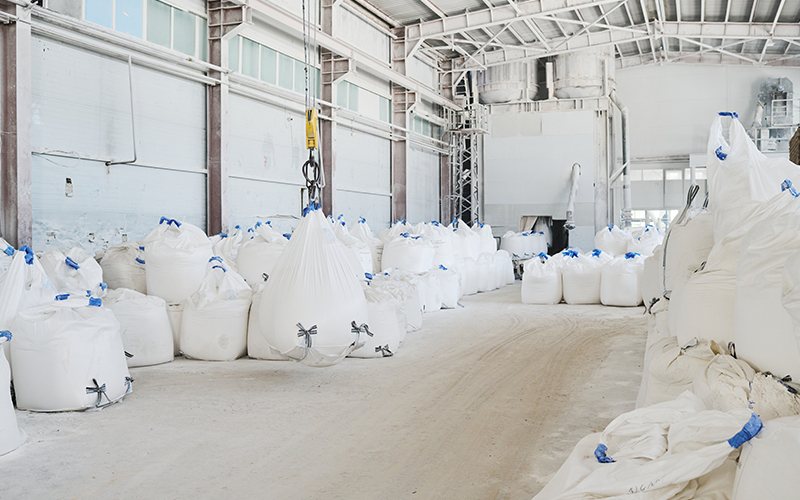
The listed MAP offer uses 25 kg bags. Buyers should confirm the bag, inner liner, seal, pallet plan, and lot marks. The container loading method should also be agreed before shipment.
Bags should stay sealed in a dry and covered warehouse. They should remain off the floor. They also need protection from rain, direct water, and damaged walls. Older lots should be used first when their condition remains acceptable.
MAP should be stored and handled under the current SDS and local rules. It should also be kept separate from incompatible materials, including strong alkaline products. Good storage limits moisture pickup, lumps, broken bags, and contamination.
Technical Grade MAP vs. Other Phosphate Fertilizers
Technical grade MAP is not the best phosphorus source for every formula. The right choice depends on the needed companion nutrient, product form, and application system.
MAP 12-61-0 vs. Granular MAP 11-52-0
Technical grade MAP 12-61-0 has a higher assay and is made for solution-based uses. Granular MAP 11-52-0 is commonly made for field application and dry fertilizer handling.
Both products supply ammonium nitrogen and phosphate. However, price per ton does not show their full value. A cheaper granular product may fail the limits for a water-soluble plant. These limits may cover insolubles, clarity, and physical form.
MAP 12-61-0 vs. MKP 0-52-34 and DAP
MAP supplies nitrogen and phosphorus. Monopotassium phosphate, or MKP 0-52-34, supplies phosphorus and potassium with no nitrogen. MKP may suit a formula that needs potassium. It also fits formulas that must avoid extra nitrogen.
Standard granular diammonium phosphate, or DAP 18-46-0, supplies more nitrogen and less P₂O₅. It is widely used for soil fertilization. Water-soluble DAP grades also exist. The exact grade must be confirmed before a comparison.
| Product | Common grade | Main companion nutrient | Common best fit |
| Technical grade MAP | 12-61-0 | Ammonium nitrogen | Fertigation, hydroponics, foliar formulas, and soluble NPK production |
| Granular MAP | 11-52-0 | Ammonium nitrogen | Broadcasting, banding, and dry soil application |
| MKP | 0-52-34 | Potassium | Soluble formulas that need phosphorus and potassium without nitrogen |
| Standard granular DAP | 18-46-0 | More ammonium nitrogen | Soil application and granular fertilizer programs |
The table compares common commercial forms. It does not replace the TDS for a specific product. Buyers should first review the full nutrient formula. Water conditions and equipment needs must also guide the choice.
How to Choose a Technical Grade MAP Supplier
A suitable supplier should offer the right grade and clear quality records. Practical packing and export support also matter. The lowest quoted price does not always give the lowest usable cost.
Compare Specifications Before Comparing Prices
All quotes should use the same technical basis. Buyers should compare main assay, nitrogen, P₂O₅, moisture, and water insolubles. They should also compare pH, appearance, impurity limits, packing, and quantity.
Price terms must also match. An FOB price cannot be compared directly with a CIF or delivered price. Final cost may include inland transport, packing, ocean freight, and insurance. Duties, testing, and port charges may add more.
Poor dissolution can create extra costs after delivery. These costs may include slower production, added filtration, tank cleaning, and blocked irrigation parts. A small saving per ton may not offset these losses.
Check Supply, Packaging, and Delivery Terms
The supplier should confirm the MOQ, packing, lead time, loading port, and shipment plan. For a long program, the buyer should ask how batch changes are controlled.
Sample approval should be linked to commercial supply. The contract should require the agreed specification. It should not rely only on the sample’s appearance. Lot marks and batch records should support traceability.
Packing details need early review. The buyer may need 25 kg bags, pallet loading, specific marks, or a stated bag material. These points affect cost, container use, handling, and local sales.
Confirm Quality and Export Documents
The core quality documents are the TDS, SDS, and batch COA. Importers may also need an invoice and packing list. A certificate of origin or inspection report may also apply. The exact set depends on the contract and destination.
Fertilizer and label rules differ by country. Before printing, the buyer should confirm the nutrient wording, language, net weight, and importer details. Required warnings must also be checked. This step can prevent relabeling or customs delays.
Document review should take place before shipment. A missing or incorrect document is harder to fix after the vessel has sailed.

Information to Include in an RFQ
A complete request for quotation helps the supplier return a useful offer. It should include:
- Required MAP grade and full specification
- Planned order quantity and order schedule
- Bag size, liner, pallet, and marking needs
- Destination country and port
- Preferred Incoterm
- Required quality and shipping documents
- Target shipment or arrival date
- Intended use, such as fertigation, hydroponics, or NPK production
The intended use gives useful context. It shows which limits need special attention. Examples include solution clarity, heavy metals, and chloride.
Frequently Asked Questions About MAP 12-61-0
Is Technical Grade MAP 12-61-0 Fully Water-Soluble?
Technical grade MAP 12-61-0 is designed for water-soluble fertilizer use. It should dissolve cleanly under the stated conditions. However, “fully water-soluble” does not always mean a laboratory result of zero insoluble matter.
The current reference specification sets water insolubles at 0.2% maximum. Buyers with strict needs should confirm the test method and limit. They should also state the solution concentration and clarity target.
Is MAP 12-61-0 the Same as Granular MAP 11-52-0?
No. Both contain monoammonium phosphate, but they are different commercial grades. Technical MAP 12-61-0 is a high-purity crystalline material for solution-based uses. Granular MAP 11-52-0 is mainly made for soil application and dry handling.
The two grades should not be exchanged without a full check. Key points include solubility, insolubles, coatings, particle form, and equipment needs.
Can MAP 12-61-0 Be Mixed With Calcium Nitrate?
MAP and calcium nitrate should not share one concentrated stock solution. Calcium can react with phosphate and form solid calcium phosphate.
They may be supplied through separate stock tanks. The streams can meet after strong dilution when the system allows it. Water quality, pH, and final concentration must still be checked.
Does MAP 12-61-0 Contain Potassium?
No. The last number in 12-61-0 is zero, so the product does not supply declared K₂O. Its chemical formula also contains no potassium.
MKP 0-52-34 may be a better fit when a formula needs phosphorus and potassium. It does not add nitrogen. The final choice should follow the full nutrient plan.
Which Documents Should a Buyer Request?
A buyer should request a TDS, SDS, and recent COA before the order. The shipment should have a batch COA that matches the lot numbers.
Import documents may include the invoice, packing list, and certificate of origin. Agreed inspection records may also apply. Local registration and label documents are needed when the destination requires them.
Conclusion: Sourcing Reliable Technical Grade MAP 12-61-0
A reliable MAP purchase starts with the exact grade and specification. Buyers should check nutrients, main assay, water insolubles, moisture, and pH. Solution behavior and batch records also matter. The final review should cover mixing limits, packing, delivery terms, and destination documents.
SUMEC Chemical supplies technical grade MAP within its fertilizer range. Buyers can contact SUMEC Chemical for the current specification and COA. The team can also provide packing details and a supply quote for MAP 12-61-0.