

SOP vs MOP: Choosing the Right Potash Fertilizer
Choosing between sulfate of potash (SOP) and muriate of potash (MOP) is not as simple as comparing two potassium grades. Both supply plant-available potassium, but MOP also supplies chloride, while SOP supplies sulfate sulfur. This difference can affect crop fit, root-zone salt load, fertilizer cost, and the commercial value of the crop.
This guide compares their nutrient content, chloride level, salinity risk, solubility, product forms, and cost per unit of K₂O. It also explains how crop sensitivity, soil, irrigation water, application method, and product specifications influence the choice. The guide is intended for importers, distributors, fertilizer blenders, and large growers who need to match each product with a specific use.
What Are SOP and MOP Potash Fertilizers?
Potash is a general term for fertilizers that supply water-soluble potassium. SOP and MOP are two of the most common forms. After they dissolve, both release potassium ions that plant roots can absorb. The key difference is the ion paired with potassium.
MOP Fertilizer: Potassium Chloride (KCl)
MOP stands for muriate of potash. Its chemical name is potassium chloride, and its formula is KCl. Agricultural MOP is often sold as 0-0-60. Some markets also offer grades with a slightly higher K₂O value.
MOP has a high potassium concentration. It is also widely available and usually costs less per unit of K₂O than SOP. These points make it a common choice for field crops and bulk fertilizer production.
MOP has a high chloride content. Chloride is a plant nutrient in small amounts. Excess chloride, however, can affect crop performance under certain conditions. The risk is higher for chloride-sensitive crops and in fields where the soil or irrigation water already contains significant chloride.
Buyers seeking more detail can consult this guide on MOP fertilizer grades, uses, and buying points.
SOP Fertilizer: Potassium Sulfate (K₂SO₄)
SOP stands for sulfate of potash. Its chemical name is potassium sulfate, and its formula is K₂SO₄. A common agricultural grade is 0-0-50. This grade also supplies about 17% to 18% sulfur in sulfate form.
Commercial SOP is low in chloride, but it is not always chloride-free. The permitted level depends on the product specification. A common agricultural specification sets a maximum of 1.5%, but buyers should confirm the actual data sheet and certificate of analysis (COA).
SOP generally costs more because it requires more processing than MOP. Still, the higher price may be justified when low chloride or added sulfur has clear value.
SOP vs MOP: What Are the Key Differences?
SOP and MOP both deliver potassium, but they differ in nutrient concentration, chloride and sulfur content, salt index, solubility, and cost. The table below summarizes the points most relevant to product selection.
| Comparison Factor | MOP | SOP | Why It Matters |
| Chemical name | Potassium chloride | Potassium sulfate | The companion ion is chloride in MOP and sulfate in SOP. |
| Chemical formula | KCl | K₂SO₄ | Both release potassium ions after they dissolve. |
| Common fertilizer grade | About 0-0-60 | About 0-0-50 | MOP usually supplies more K₂O per tonne. |
| K₂O supplied per tonne | About 600 kg | About 500 kg | More SOP is needed to supply the same amount of K₂O. |
| Sulfur content | Does not supply sulfur | About 17%–18% sulfur | SOP may reduce the need for a separate sulfur source. |
| Chloride content | High, often about 45%–47% | Low, often specified at 1.5% maximum | Chloride load matters for sensitive crops, soil, and irrigation water. |
| Salt index | Higher | Lower | MOP needs more care near seeds, young roots, and saline soils. |
| Water solubility | Higher | Lower than MOP | Product grade and solution strength must match the application system. |
| Common product forms | Powder and granular | Powder and granular | Particle size affects direct use, handling, and dry blending. |
| Typical cost position | Usually lower | Usually higher | Buyers should compare cost per unit of K₂O, not only price per tonne. |
| Common use | Field crops and standard NPK production | Low-chloride and sulfur-containing fertilizer programs | The best fit depends on the crop, soil, water, and end use. |
The figures above are common market values. They are not fixed limits for every product. The supplier’s data sheet, contract specification, and batch COA should govern each purchase.
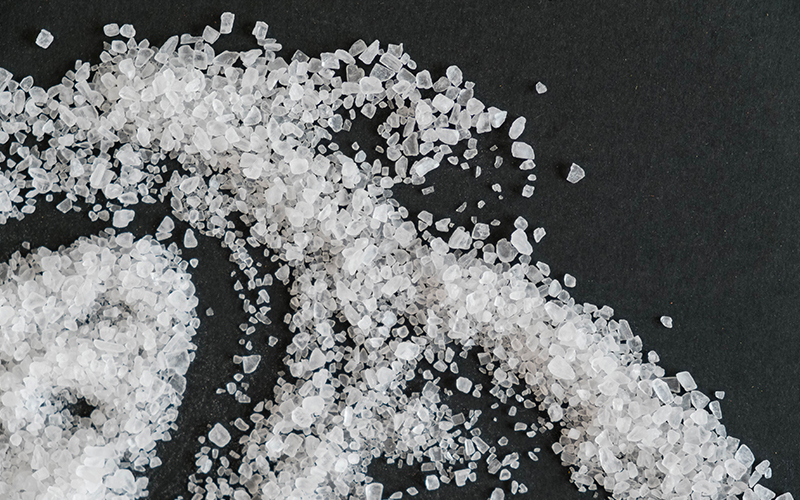
Nutrient Content: MOP Supplies More K₂O, While SOP Adds Sulfur
A tonne of 0-0-60 MOP supplies about 600 kg of K₂O. A tonne of 0-0-50 SOP supplies about 500 kg of K₂O. It also supplies about 170 to 180 kg of sulfur.
This difference affects the amount of product needed. Supplying 100 kg of K₂O requires about 167 kg of 0-0-60 MOP or 200 kg of 0-0-50 SOP.
The sulfur in SOP has value only when the crop or soil needs it. If sulfur already comes from ammonium sulfate, magnesium sulfate, or another fertilizer, that extra value may be limited.
Chloride and Salt Load: The Total Growing System Matters
Commercial MOP has a high chloride content. SOP contains far less, so it is often considered for crops that need tighter chloride control.
However, chloride is not always harmful. Plants need it in small amounts. Problems are more likely when the total chloride load exceeds what the crop and growing system can tolerate.
MOP also has a higher salt index than SOP. This may increase the risk of salt injury near seeds and young roots. SOP has a lower salt index, but it still adds dissolved salts to the root zone. Any application plan should consider rate, placement, soil salinity, drainage, and irrigation water.
Solubility and Product Grade: The Product Name Is Not Enough
Both MOP and SOP are water-soluble salts. MOP usually dissolves more readily than SOP. This can affect the concentration of a stock solution and the time needed to prepare it.
Still, water solubility alone does not make a product suitable for fertigation. Standard powder or granular products may contain more insoluble matter than grades made for water-soluble fertilizer production.
For fertigation or liquid fertilizer production, buyers should check purity, insoluble matter, particle size, and solution behavior. The supplier should also confirm that the grade is designed for the planned system.
Cost: Price per Tonne Does Not Show the Full Value
MOP usually has a lower price per tonne and a higher K₂O content. As a result, it often has a lower cost per unit of potassium.
A basic comparison can use this formula:
Landed cost per tonne of K₂O = Landed product cost per tonne ÷ K₂O fraction
For 0-0-60 MOP, the K₂O fraction is 0.60. For 0-0-50 SOP, it is 0.50.
This calculation is only the first step. Buyers should also consider the value of sulfur, chloride risk, crop value, application cost, and quality requirements. Prices also vary by origin, grade, freight, and order volume.
SOP vs MOP: How Do Crop, Soil, and Water Conditions Affect the Choice?
No crop list can settle the choice for every farm. The same crop can respond differently across soil types, climates, and fertilizer programs. The full production system must therefore be considered.
Crop Chloride Sensitivity and Quality Targets
MOP is widely used for wheat, corn, sugar beet, and other crops that often tolerate planned chloride inputs. It is usually a practical choice when soil and water conditions are suitable.
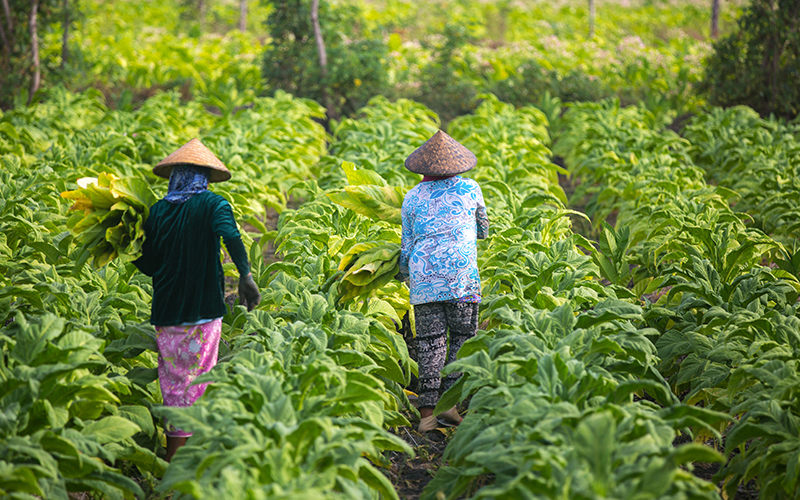
Potatoes, tobacco, and some fruit and vegetable crops may need tighter chloride control. Sensitivity can vary by crop, variety, growth stage, and local conditions. High-value crops may also have strict targets for dry matter, storability, flavor, or appearance.
This does not mean SOP will always improve yield or quality. Using SOP avoids the large chloride input associated with MOP and also supplies sulfur. A clear benefit is more likely when excess chloride or a lack of sulfur would otherwise limit crop performance.
Soil Salinity, Drainage, and Irrigation Water
Both MOP and SOP are fertilizer salts. Both can raise salt concentration around roots when rates are too high or placement is too close. MOP has a higher salt index, so it requires extra care near seeds and young roots.
Soil tests should include potassium and, where relevant, salinity and chloride. Irrigation water should also be tested in dry regions, greenhouses, other protected systems, and poorly drained fields. It may already carry a large chloride load into the root zone.
Rainfall and drainage affect how quickly chloride moves through the soil. In well-drained fields with enough rainfall, chloride may move below the main root zone. In dry or poorly drained fields, it may remain and build up.
The source of salt also matters. A low-chloride fertilizer cannot solve a wider salinity problem caused by irrigation water, soil conditions, or other inputs. SOP can reduce added chloride, but it is not a treatment for saline soil.
Sulfur Demand and the Full Nutrient Program
SOP supplies sulfur in sulfate form, which plant roots can take up directly. This can be useful for crops with a clear sulfur need.
However, the fertilizer plan may already include sulfur from ammonium sulfate, magnesium sulfate, single superphosphate, or another source. In that case, the sulfur in SOP may offer little added value. Failing to account for it can add needless cost or supply more sulfur than planned.
A complete nutrient budget should include every source. The aim is to meet potassium and sulfur needs without adding more chloride or salt than the system can handle.
When Should Buyers Choose SOP or MOP?
Product selection should begin with the intended use. A large grain farm, a greenhouse grower, and an NPK producer may need very different grades.
Choose MOP for Cost-Efficient, Chloride-Tolerant Applications
MOP is often the better fit when:
- The crop can tolerate the planned chloride rate.
- Soil and irrigation water do not create a high chloride risk.
- Sulfur is already adequate or supplied by another fertilizer.
- A concentrated potassium source is needed for standard NPK production.
- Cost per unit of K₂O is a key purchasing target.
- Granular material is required for field use or bulk blending.
MOP should not be chosen solely because it has the lowest price per tonne. Buyers should also account for nutrient concentration, freight, application rate, and crop fit.
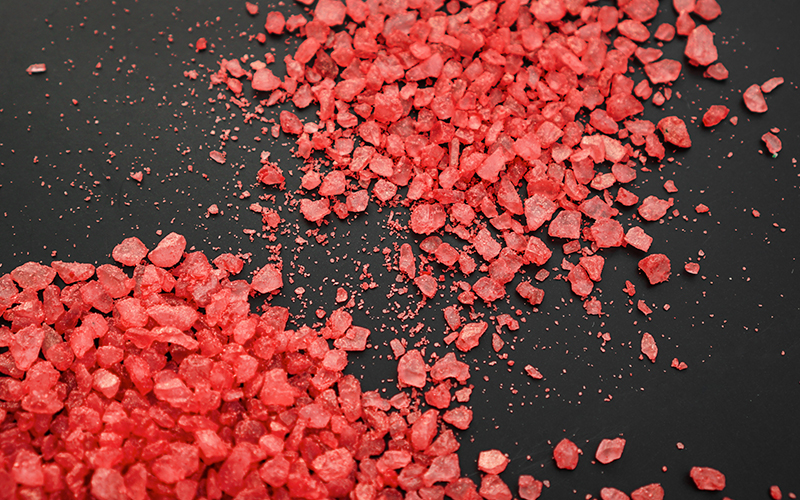
Choose SOP for Low-Chloride and Sulfur-Supplying Programs
SOP is often the better fit when:
- The crop or variety has a known risk from high chloride.
- Soil or irrigation water already contains notable chloride.
- The fertilizer program needs both potassium and sulfur.
- Crop value or quality goals can justify the higher input cost.
- A low-chloride NPK or specialty fertilizer is being produced.
- The customer or market specifies a clear chloride limit.
SOP is not automatically the better choice. It creates added value only when its low-chloride and sulfur features meet a real need.
Can SOP and MOP Be Used in the Same Fertilizer Program?
Some fertilizer programs can use both sources. MOP can supply part of the potassium where the total chloride load remains within safe limits. SOP can provide the balance and any required sulfur.
This approach can balance cost and crop needs. It still requires a clear nutrient budget. The plan must account for total potassium, sulfur, chloride, and overall salt load.
If SOP and MOP are to be dry-blended, their physical properties must also be checked. Particle size, density, moisture, and flow should be similar enough to reduce separation during handling. A supplier or formulator should test the blend before large-scale production.
What Should Buyers Check Before Ordering SOP or MOP Fertilizer?
A product name alone is not enough for a purchase order. SOP and MOP can differ by source, process, form, and intended use. Buyers should set clear chemical and physical limits before requesting a quote.
Chemical Specifications
Important chemical items include:
- Potassium content stated as K₂O
- Sulfur content for SOP
- Chloride content
- Moisture
- Water-insoluble matter when solution use is planned
- Free acidity where it is part of the SOP standard
- Other impurity limits required by the destination market
The technical data sheet lists standard or typical limits. The COA reports actual test results for a specific batch. The supply contract should state which limits are binding and which test method will be used.
Product Form and Intended Application
Powder and granular grades serve different purposes. Granular material is often selected for direct soil application and dry blending. Powder may suit fertilizer production or another process that requires a smaller particle size.
A product that dissolves in water does not automatically qualify as a water-soluble fertilizer grade. Fertigation and liquid production often require tighter limits for insoluble matter, purity, particle size, and solution behavior. SOP also dissolves less readily than MOP, so solution concentration and water temperature may affect preparation.
Buyers should state whether the product is intended for direct application, bulk blending, granulation, solution production, or fertigation. This helps prevent the purchase of a low-priced but unsuitable grade.
Documentation, Packaging, and Supply Reliability
The commercial review should cover:
- COA and product data sheet
- Safety data sheet and required labels
- Country of origin and local compliance documents
- Packaging size and bag material
- Pallet or bulk loading requirements
- Batch consistency
- Available volume and lead time
- Port, freight, insurance, and delivery terms
Packaging should suit the product form, storage conditions, and transport route. The supplier should also confirm what measures are used to limit moisture uptake and caking.
Buyers can review available SOP, MOP, and other fertilizer supply options before setting the final inquiry details.
SOP vs MOP Fertilizer FAQs
Is SOP Always Better Than MOP?
No. SOP has clear value when low chloride or added sulfur is needed. MOP may offer better value when chloride risk is low and sulfur is already adequate. Both can be reliable potassium sources.
Does MOP Always Harm Chloride-Sensitive Crops?
No. Risk depends on the crop, variety, rate, timing, soil, rainfall, drainage, and irrigation water. A sensitive crop may still tolerate a controlled chloride input under some conditions. Local test data and agronomic advice should guide the rate.
Can All SOP and MOP Grades Be Used for Fertigation?
No. Standard agricultural powder or granules should not be assumed to suit fertigation. The selected grade must meet the required limits for solubility, insoluble matter, purity, and system compatibility.
Is Price per Tonne the Best Way to Compare SOP and MOP?
No. MOP and SOP contain different amounts of K₂O. The first comparison should be landed cost per unit of K₂O. Buyers should then consider sulfur value, chloride risk, crop value, and application cost.
Conclusion: Match the Potash Fertilizer to the Application
MOP is often the cost-effective choice for large-scale field production and standard fertilizer manufacturing. It works best where the planned chloride input is acceptable. SOP is often the better choice when low chloride and sulfate sulfur provide clear value.
The final decision should be based on crop needs, soil and water tests, product specifications, and landed cost. SUMEC Chemical can support buyers with current fertilizer specifications, packaging options, and supply arrangements. A clear inquiry should state the destination, volume, product form, intended use, and required standard. This allows the supplier to prepare a more accurate quotation and supply proposal.