

Styrene Monomer: Properties, Applications, and Storage Considerations
Styrene monomer is a common liquid chemical raw material widely used in modern manufacturing. It is also called vinylbenzene. Many everyday plastic and rubber goods come from this basic chemical building block. This article introduces its basic features, common uses, key safety tips and proper storage methods. It gives clear guidance for buyers, factory operators and business users. They can learn how to handle styrene monomer for daily procurement and on‑site work.
Basic Properties of Styrene Monomer
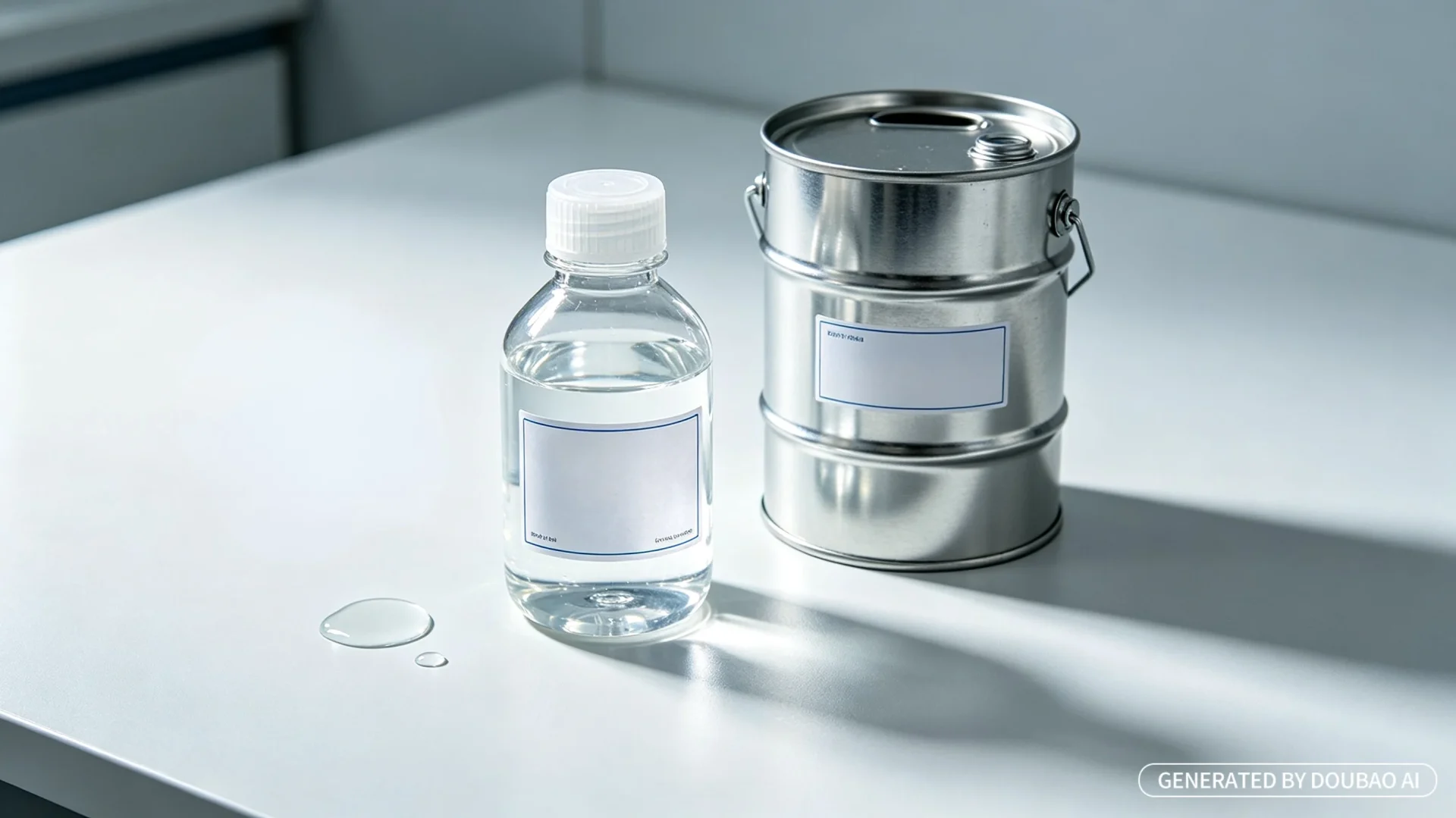
Styrene monomer is a clear, colorless oily liquid. It has a light, sweet‑smelling odor. Factories make styrene monomer from ethylene and benzene. Workers run the reaction under strict, controlled conditions.
One important feature of styrene monomer is its tendency to self‑polymerize. Its separate molecules can join together over time with no extra trigger. When self‑polymerization happens, liquid styrene slowly turns into hard, solid plastic. To solve this problem, chemical manufacturers add special inhibitors to commercial-grade styrene monomer. These additives slow down the natural polymerization reaction. They work during shipping and long‑term storage. Without these inhibitors, the liquid will turn solid in containers before people can use it.Pure styrene monomer does not mix well with water. Pour styrene into water, and it will not dissolve. But it mixes easily with many common factory organic solvents. Styrene monomer is also flammable. Open fire, hot surfaces and high temperatures can easily cause fires and explosions. Workers must keep this basic risk in mind at all times.
End‑Use Applications of Styrene Monomer
Styrene monomer has an active chemical structure. It serves as the core raw material for many high‑volume polymer products. It can combine with many other chemical materials. Manufacturers mix it with different co‑monomers. They make hard plastics, flexible synthetic rubber and various surface‑coating materials. Almost everyone uses styrene‑based goods in daily life without knowing it.
Polystyrene (PS) for Packaging and Consumer Goods
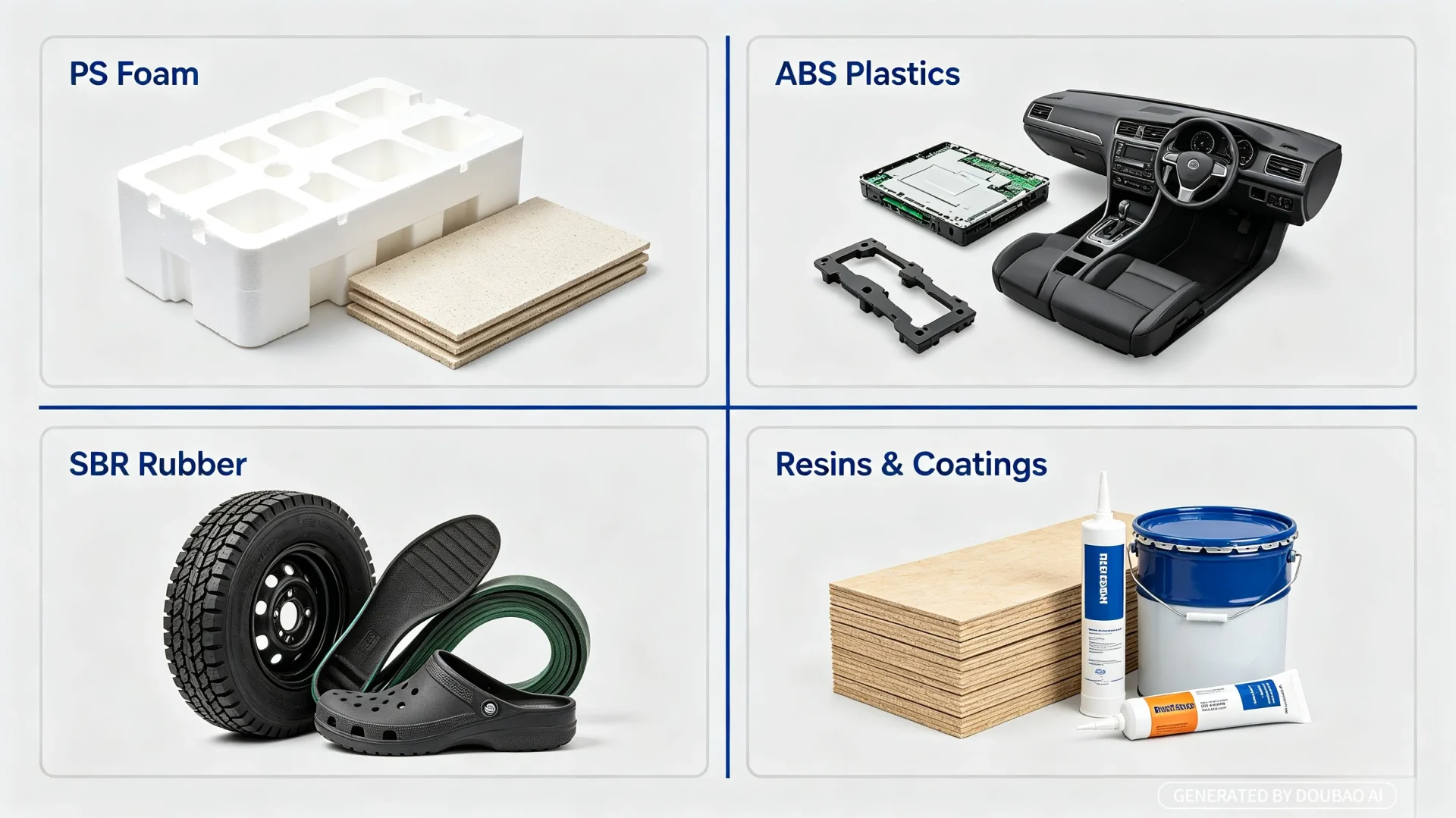
This is the largest single‑use case for styrene monomer. Large numbers of styrene molecules link together. They form polystyrene plastic.
General‑purpose hard polystyrene is low‑cost and easy to shape. Factories use it to make disposable cups, food containers, plastic toy parts and small electronic shells. Expanded polystyrene is also known as EPS foam. It makes ultra‑light protective packaging foam and rigid building insulation boards. Packaging foam protects fragile goods from bumps during truck and sea shipping. Insulation foam keeps homes and offices at a stable temperature all year round.
ABS Engineering Plastic for Hardware and Auto Parts
ABS is a tough, impact‑resistant engineering plastic. It forms from styrene monomer, acrylonitrile and butadiene. Each material brings its own benefit. Styrene creates a smooth surface and supports easy processing. Acrylonitrile adds resistance to chemical damage. Butadiene makes the material better at absorbing impacts.
You can find ABS products everywhere. Common products are laptop covers, home appliance parts, toy blocks, car interior parts and hard-shell suitcases. This material balances surface hardness and shock‑resistant performance. So it is widely used as a top engineering plastic in consumer product industries worldwide.
SBR Synthetic Rubber for Tires and Floor Mats
Styrene‑butadiene rubber (SBR) comes from styrene monomer mixed with butadiene. It is among the most widely produced synthetic rubber types on the global market.
Large‑volume industries depend heavily on SBR rubber. It is used for vehicle tires, shoe soles, industrial belts and indoor rubber floors. This synthetic rubber offers good wear resistance. It keeps stable performance at normal room temperatures. In many cases, SBR can replace more expensive natural rubber. It helps factories cut total production costs.
Polyester Resins, Coatings and Industrial Adhesives
Styrene monomer is an important input for different types of polyester resin. Workers use these polyester resins to build fiberglass composite products. Common products are small boat bodies, large water tanks and building wall panels.
Besides composite products, styrene is also used to make paints, printing inks and common industrial adhesives. These finished products support furniture factories, printing workshops and general‑purpose assembly lines.
Key Safety Risks for Styrene Monomer Handling
Styrene monomer is a useful industrial chemical. Still, people must handle it with great care. Physical contact and improper operation can harm workers’ health and safety. All team members working near styrene monomer should get basic safety training.
- Skin and eye contact: Liquid styrene can irritate human skin and eyes. Short accidental contact may cause slight redness. Long‑time repeated direct touch creates stronger burning‑like discomfort. Operators must wear chemical‑resistant gloves and protective safety goggles. They need this gear during transfer, sampling or inspection work.
- Inhalation risk: Evaporated styrene vapor may irritate the nose and throat. Working areas need steady, good‑quality air flow. Good ventilation keeps vapor concentration low and protects factory staff. Do not stay inside closed spaces filled with styrene vapor.
- Fire hazard: Styrene monomer is flammable. Its light‑weight vapor can catch fire near high heat, mechanical sparks or open flames. Keep all styrene storage and processing areas far away from ignition sources.
Practical Storage Guidelines for Styrene Monomer
Poor‑quality storage conditions speed up unwanted self‑polymerization. This chemical change may cause tank inner blockage. It can also lead to full‑batch product failure and hidden safety trouble. Buyers and warehouse teams should follow these practical storage rules.
Temperature Control for Polymerization Reduction
Keep storage temperature low and stable. Higher temperature speeds up the self‑polymerization reaction a lot. Most chemical factories suggest storing styrene monomer below 25 °C. Avoid direct sunlight exposure. Never place storage drums or tanks inside continuously hot outdoor storage zones. Do not set containers beside heat‑generating machines or hot‑steam pipes. Sharp day‑night temperature swings also raise polymerization risk.
Inhibitor Level Checks for Stored Materials
Commercial storage‑grade styrene monomer holds a measured amount of polymerization inhibitor. This protective inhibitor slowly loses its effect over time. Warehouse workers need to read product batch labels. They must track valid storage time clearly. Never use aged styrene monomer whose inhibitor has lost most of its function. Procurement teams should make reasonable usage plans. Try to avoid unnecessary long‑term large‑volume stockpiling.
Container and Warehouse Environment Requirements
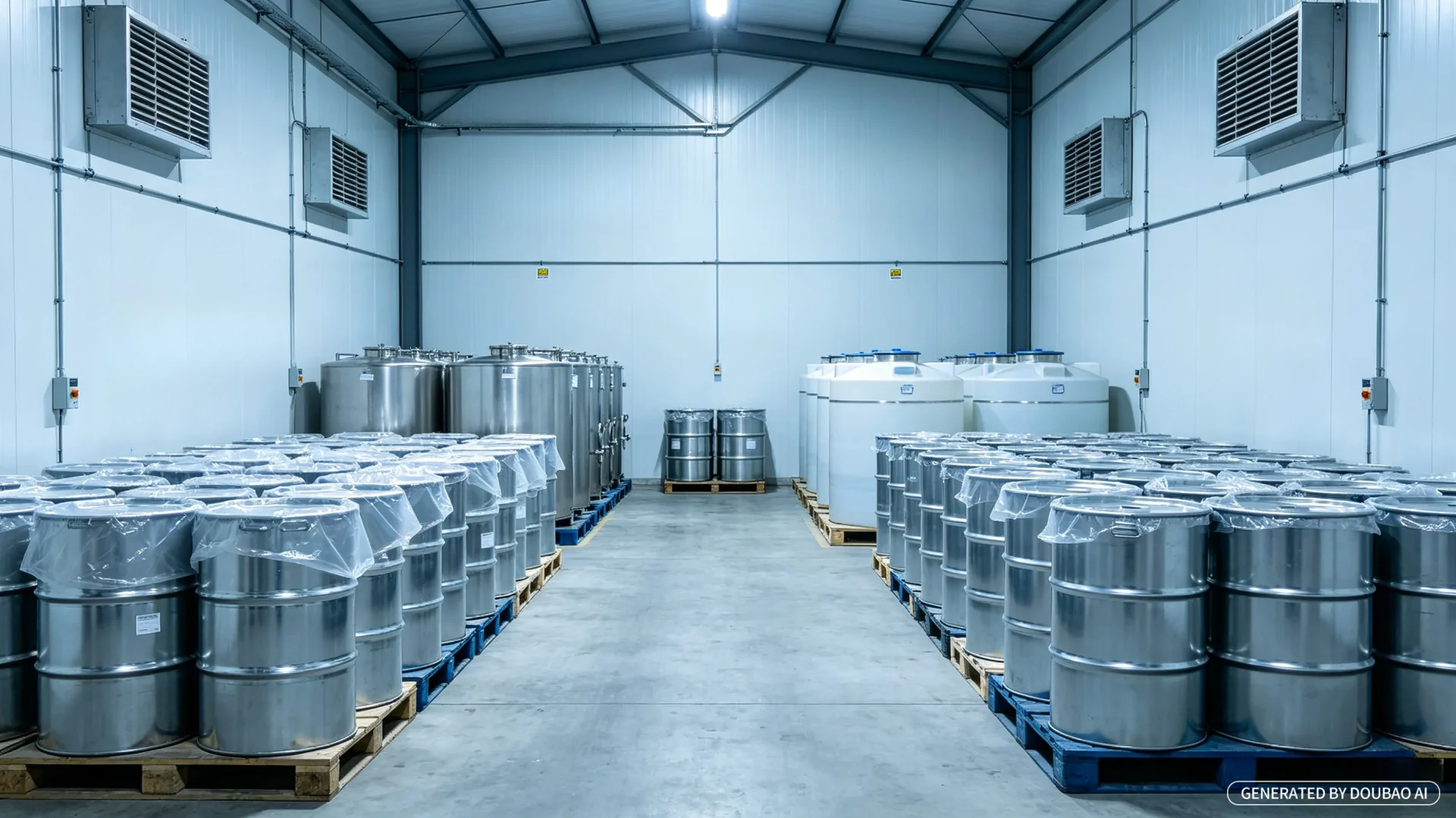
Store styrene monomer in clean, fully sealed metal tanks or standard chemical drums. Keep all container lids tightly closed. Tight sealing stops vapor from escaping into air. It also keeps outside dust or impurities out of the liquid.
The whole storage site needs reliable ventilation systems. Ground tanks and metal drums properly to release static electricity. Static‑electric sparks can start chemical fires. Do not store styrene monomer together with strong oxidizing agents. Keep clear distance from other highly reactive chemicals inside the same warehouse area.
First‑in‑First‑Out Rules for Chemical Inventory
Strictly follow the “first‑in, first‑out” rule for chemical inventory. Always use older product batches first. Do not store styrene monomer unused for months without regular inspections. Run simple regular inspections on tanks and drums. Watch for visible signs such as liquid thickening or small solid pieces. These small signs are early warnings of unwanted polymerization.
FAQs
1. What causes styrene monomer to turn solid in storage?
Styrene monomer turns solid due to self-polymerization. High heat, long storage time and failed inhibitors can speed up this reaction. Once the liquid hardens into solid plastic, the entire batch becomes useless for production.
2. Can styrene monomer store outdoors?
No. Styrene monomer is not suitable for outdoor storage. Direct sunlight and large day-night temperature changes will raise the risk of polymerization. If you have to store it outdoors, keep it shaded and cool, store it for a shorter time and check it often.
3. What should workers do if liquid styrene touches skin?
Workers need to take fast and correct first-aid measures. Quickly remove contaminated clothing, and flush the affected skin or eyes with clean running water. See a doctor at once if irritation continues.
4. How long can styrene monomer stay in storage?
Styrene monomer has a shelf life of 3 to 6 months in cool and standard storage environments. High temperatures will shorten its storage time. The inhibitor quality also affects storage time, so always follow your supplier’s rules.
5. Can we mix styrene monomer with other chemicals in one tank?
No. You cannot mix styrene monomer with other chemicals in the same tank. Mixing different chemicals may cause unexpected reactions, overheating or rapid solidification. Make sure to clean the tank completely before loading a new chemical material.
Final Thoughts
Styrene monomer is a key industrial material. It is widely used to make modern plastics, synthetic rubber and composite products. It supports huge numbers of everyday products. Examples range from lightweight shipping‑protection foam to vehicle interior parts.
It delivers wide industrial value. However, styrene monomer is flammable and easy to turn solid. So it needs correct storage and careful handling. Keep storage temperatures stable, check inhibitors often, use old materials first, and maintain good ventilation in storage areas. These simple, repeatable steps protect on‑site staff members. They prevent expensive material waste and keep your whole production process running smoothly.