

Acetic Acid: Trade Development and Application Prospects of a Core Organic Chemical Raw Material
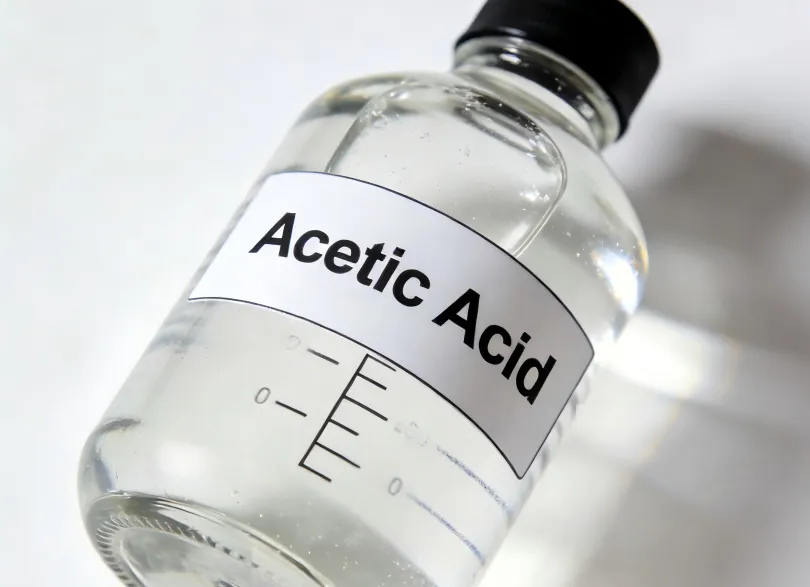
Acetic acid, as a widely used basic raw material in the global organic chemical industry, is a key intermediate connecting coal chemical industry, fine chemical industry, light industry manufacturing and other fields, and occupies an important position in industrial production and international trade. With its mature production technology, diverse downstream demand and stable trade liquidity, acetic acid has become a key chemical product in the field of import and export trade, with high market participation and significant industrial linkage effects. Acetic acid is a colorless, clear and hygroscopic liquid with an irritating odor and excellent solubility, which can be miscible with various solvents such as water, ethanol and ether. As a typical organic acid, it has relatively mild corrosiveness, and its vapor has a slight irritation to the eyes and nose. It has the general reaction activity of organic acids and can undergo various chemical reactions, providing basic conditions for the production of downstream derivatives. In the industrial field, acetic acid can be divided into different grades according to purity to meet the needs of different scenarios. Products of different grades have great differences in impurity content and different application focuses, and the product grading characteristics make its application range wider.
The global acetic acid production process has undergone iterative upgrades, and there are currently a variety of mature processes applied in industrial production. Among them, the mainstream process occupies a dominant position due to its advantages in technical maturity and economy. This process has a wide range of raw material sources, with the characteristics of high raw material utilization rate, high product purity and low energy consumption, which is suitable for large-scale production. Relying on its own resource advantages, the domestic acetic acid industry has formed a complete industrial chain, with continuous optimization of core technologies and significant advantages in production capacity scale and cost. In addition to the mainstream process, there are a small number of other processes applied in specific production scenarios to meet different production needs. The domestic acetic acid industry presents a pattern of sufficient production capacity and high concentration. Leading enterprises occupy an important market share by virtue of technological and scale advantages, and some regions have become core acetic acid production areas relying on logistics and industrial cluster advantages.
Known as the “universal intermediate”, acetic acid has downstream applications covering multiple fields such as chemical industry, textile, food, medicine and electronics. Its demand structure is clear and has strong rigidity, and the overall demand pattern presents the characteristics of traditional fields stabilizing the foundation and emerging fields adding increments. Among them, some core downstream fields have a relatively high demand for acetic acid, forming rigid demand, which is closely related to the development of related industries and has strong cost transmission resilience. There are also several downstream fields with rapid demand growth, which indirectly drive the increase in acetic acid demand benefited from the continuous development of related industries. In addition, some application fields have scattered but stable demand, forming the basic disk of acetic acid demand. With industrial upgrading and technological progress, the application of acetic acid in emerging fields such as new energy, degradable materials and electronic chemicals is gradually expanding. At the same time, it is also widely used in fields such as food and medicine, with multiple practical functions.
The global acetic acid market presents a pattern of regional concentration and active trade. As an important global producer and consumer of acetic acid, China occupies an important position in the global market. Domestic acetic acid has strong competitiveness in the international market by virtue of its own advantages, with export markets covering many regions. From the perspective of trade models, acetic acid trade is mainly divided into two categories, each with its own characteristics to meet different market needs. Among them, the long-term contract market has relatively stable prices, while the spot market has high flexibility. In recent years, the global acetic acid market pattern has continued to adjust, and the capacity expansion in some regions has had a certain impact on the market. However, relying on technological upgrading and product layout, domestic acetic acid still maintains strong export resilience. In import and export trade, as a dangerous chemical, the transportation and storage of acetic acid must comply with relevant specifications, adopt special packaging and storage methods, and take good safety protection measures. There are differences in trade standards for products of different grades, and some high-grade products have relatively high trade thresholds.
Looking forward to the future, the acetic acid industry will develop around three major directions: green low-carbon, high-endization and industrial chain extension, while also facing many industry challenges. In terms of production capacity, the industry will gradually slow down the pace of new capacity addition, focus on improving the efficiency of existing production capacity through technological transformation, and the industry concentration is expected to further increase. At the technical level, green production will become the core development trend of the industry, relevant production processes will be continuously optimized, and the exploration and application of new technologies will help the industry achieve low-carbon transformation. In terms of product structure, the competition of low-end products will gradually intensify, and the demand for high-end and high-purity products will grow steadily, becoming an important growth point for industry profits. At the trade level, the global trade pattern will continue to adjust, and China’s acetic acid exports will gradually shift to quality improvement, while continuously expanding emerging markets and deepening international cooperation. For import and export trade enterprises, grasping the industry development trend, optimizing product structure, expanding stable overseas channels and strengthening logistics safety control will be the key to improving market competitiveness. In summary, as a basic chemical raw material, acetic acid has a profound industrial foundation, diverse downstream demand and high global trade activity. Although the industry faces various challenges, driven by a variety of favorable factors, the industry has strong development resilience, and the import and export trade still has broad market space.