

How Is Urea Made? Industrial Production Process Explained
Urea looks simple: small white grains in a bag. Yet each grain has passed through a plant that controls heat, pressure, and product quality. To make urea, plants react ammonia with carbon dioxide under high pressure and heat. They then recover unused feed, remove water, and prepare the product for sale.
For buyers, these steps help explain why urea products differ. They affect the water content, biuret level, and strength of the grains. This guide follows the main steps, then explains the quality checks and plant improvements that matter.
What Is Urea?
Urea is a compound that dissolves readily in water. Its chemical formula is CO(NH₂)₂, and it is also called carbamide. Fertilizer-grade urea commonly contains about 46% nitrogen by weight. This makes it a rich source of nitrogen for crops.
Commercial urea is made by chemical synthesis. Depending on its grade, it can serve as fertilizer or help make resins, adhesives, and diesel exhaust fluid. These uses share the same basic molecule. However, each use may need different limits on impurities and additives.
What Raw Materials Are Used to Make Urea?
Ammonia and carbon dioxide are the two main raw materials. Plants also need steam, power, cooling water, and process water. These support the process, while ammonia and CO₂ provide the feed for the core reaction.
Ammonia: The Nitrogen Source
Ammonia, NH₃, supplies the nitrogen in urea. It is made in a separate process that combines nitrogen with hydrogen. This is known as the Haber–Bosch process. The nitrogen comes from air, while the hydrogen source depends on the plant.
Many ammonia plants use natural gas or coal to make hydrogen. Other routes use power to split water. Thus, gas and coal are used upstream to make the feed. They do not go straight into the urea reactor.
Carbon Dioxide: The Carbon Source
Carbon dioxide supplies the carbon in urea. Many conventional ammonia plants produce a CO₂ stream during hydrogen production. A urea plant can use this recovered gas.
This link explains why ammonia and urea plants often share a site. It gives the urea plant access to both feeds and shared utilities. If the ammonia route does not produce CO₂, a separate source is still needed.
How Is Urea Made? The Industrial Process Step by Step
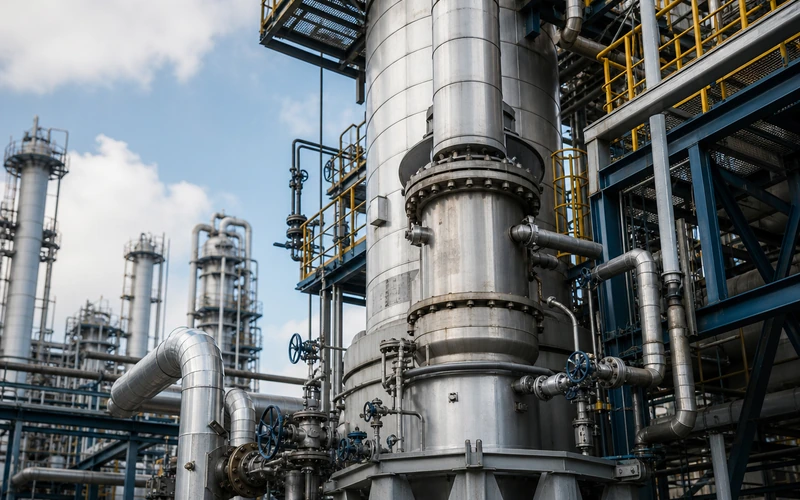
The main stages are feed preparation, reaction, recovery, and concentration. The final steps depend on the product. Solid urea goes through prilling or granulation, then cooling and handling. A plant making a liquid product can use a different finishing route.
Step 1: Prepare and Pressurize the Feedstocks
The plant raises the pressure of both feeds before they enter the synthesis system. Pumps handle liquid ammonia, while compressors handle the CO₂ gas.
Operators control the feed rate, heat, and pressure to keep the process stable. They also check feed quality and equipment condition. This matters because the hot process fluids can cause corrosion. The equipment must withstand both pressure and chemical attack.
Step 2: Form Ammonium Carbamate and Convert It into Urea
Urea forms through two linked reactions. First, ammonia reacts with CO₂ to form a compound called ammonium carbamate:
2NH₃ + CO₂ ⇌ NH₂COONH₄
The carbamate then forms urea and water:
NH₂COONH₄ ⇌ CO(NH₂)₂ + H₂O
The first reaction releases heat. The second needs heat and takes more time. Together, they form the basis of industrial urea production.
A typical design may work near 180–190°C and roughly 150 bar. The exact values vary by plant design. High pressure helps keep the feeds in the reacting liquid mixture. Heat helps the reaction proceed at a useful rate.
The arrows point both ways because the reactions can reverse. Not all the feed becomes urea in one pass. The liquid that leaves this stage still contains water, ammonia, and carbamate as well as urea.
Step 3: Separate and Recycle Unreacted Materials
The plant removes unused feed from the urea solution and sends it back for reuse. This cuts raw material losses and improves the overall yield.
A unit called a stripper helps break down leftover carbamate into ammonia and CO₂. These gases leave the liquid and enter a recovery system. The plant captures them and returns them to the synthesis section.
Plants differ in how they carry out this step. Some use CO₂ stripping; others use ammonia stripping or related methods. Further stages remove more of the remaining feed before the liquid moves on.
This loop is a key part of the process. The plant can make good use of its raw materials even though one pass does not convert them all.
Step 4: Concentrate the Urea Solution
Evaporation removes water and raises the urea content of the solution. Plants commonly use a vacuum for this step. Lower pressure lets water boil off at a lower temperature.
The target water content depends on what comes next. Prilling needs a nearly water-free urea melt. Some granulation systems can use a more dilute feed. They remove more water as the grains grow.
The plant must control both heat and time. Keeping urea hot for too long can increase by-products such as biuret. Good control removes enough water while limiting damage to product quality.
Step 5: Produce Solid Urea by Prilling or Granulation
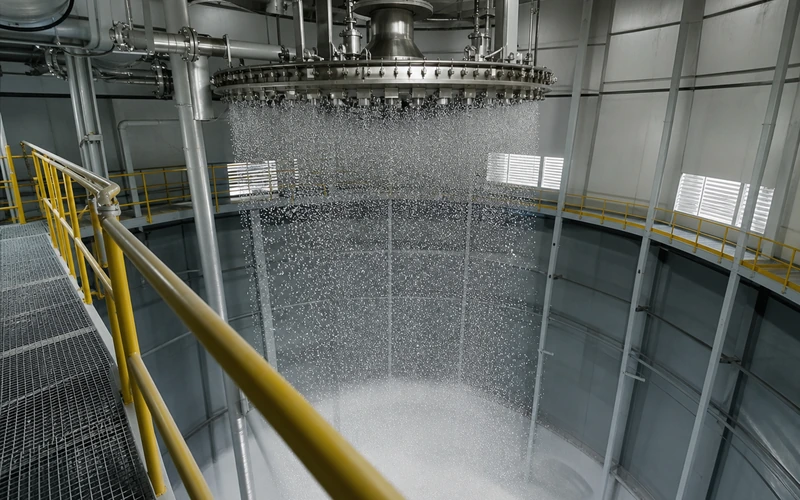
Prilling forms solid grains from falling drops. Granulation builds larger grains around small seeds of urea. These are two different ways to make a solid product.
In prilling, liquid urea drops from the top of a tall tower. Air removes heat as the drops fall. They become small, rounded grains called prills.
In granulation, urea is sprayed onto seed particles. In common fluid-bed systems, air keeps the particles moving. New layers build up and solidify, making the grains larger.
Granules are generally larger and stronger than prills. This can help them withstand bulk handling. Even so, buyers should check the actual size and strength rather than judge by the product name alone.
Plants making urea solutions can skip solid formation. Their finishing route must meet the specified urea content and purity.
Step 6: Cool and Prepare the Product for Shipment
The solid product is cooled and checked before storage or shipping. Granulation plants also screen the grains by size. Small grains can return as seeds, while large ones are usually crushed before reuse.
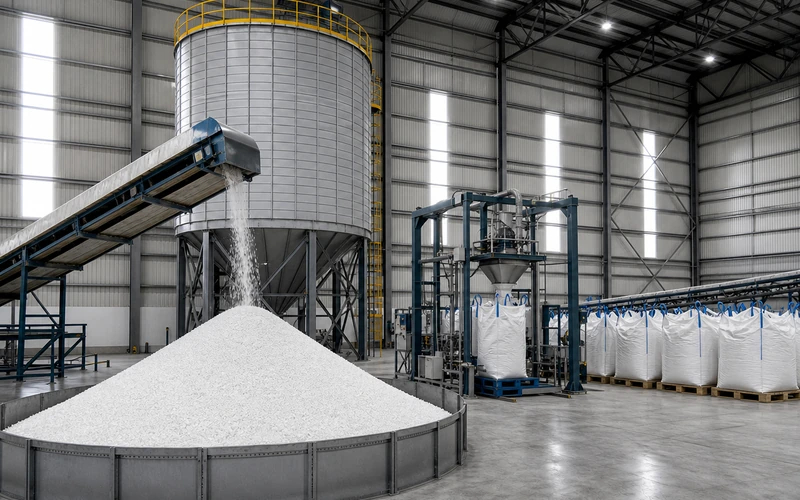
Dry storage and sound packaging help keep the product in good condition. Urea must be protected from moisture and contamination during handling and transport. It may ship in bags or in bulk, based on the agreed supply terms.
Some grades allow additives to improve handling or reduce caking. These are not needed in every product. Any additive or coating must suit the buyer’s intended use.
How Does the Production Process Affect Urea Quality?
The process affects both the chemical makeup and the physical form of urea. Buyers should check nitrogen, moisture, biuret, and particle properties. A certificate of analysis, or COA, provides batch test results for comparison with the agreed limits.
Nitrogen Content, Moisture, and Biuret
Nitrogen content shows the nutrient value of fertilizer urea. Moisture and biuret limits help define whether it suits the intended use.
A 46% nitrogen result does not mean the product is only 46% pure urea. It describes the share of nitrogen by weight. The urea molecule also contains carbon, oxygen, and hydrogen.
Moisture matters because damp urea can cake in storage. Biuret is a by-product that can form when urea stays hot. Some sensitive crops and uses, such as leaf sprays, need lower levels of biuret.
For example, SUMEC Chemical lists these limits for its prilled and granular urea:
| Property | Published specification |
| Nitrogen | 46% minimum |
| Biuret | 1.0% maximum |
| Moisture | 0.5% maximum |
These limits describe the product specification. Buyers should compare them with the supplied batch’s COA.
Particle Size, Strength, and Caking Resistance
Size and strength affect how urea moves through equipment and spreads in the field. Grains of a similar size tend to handle more evenly. Stronger grains also tend to break less during transport, which helps limit dust and fines.
Caking depends on more than grain strength. Water, temperature changes, and the pressure of stacked product can all play a role. Good plant control helps, but the storage conditions still matter.
A purchase order should state the size range and the share of grains that must meet it. Where breakage is a concern, the buyer can also set a strength test and a fines limit.
Purity Requirements for Different Applications
The end use determines which impurities need control. Fertilizer buyers focus on nutrient content and handling. Other users may need limits on metals, insoluble matter, or additives that could affect their process.
Diesel exhaust fluid is one example. It contains 32.5% high-purity urea by weight in deionized water. A fertilizer nitrogen result alone does not prove that a grade is fit for this use.
The buyer and supplier should agree on the use before choosing a grade. Similar color, shape, or nitrogen content does not make all grades interchangeable.
How Are Urea Plants Improving Efficiency and Reducing Emissions?
Plants can use less energy and lose less material by recovering heat and treating process streams. Recent designs and upgrades focus on these areas while keeping the product within its quality limits.
Heat Recovery and Lower Steam Consumption
Heat released in one stage can help run another. For example, heat from carbamate formation can be used to make steam for other parts of the plant.
Modern designs improve how heat is shared across the process. New projects announced in 2026 continue to adopt designs that aim to cut steam use. Lower-pressure synthesis designs can also reduce the power needed to pressurize the feed.
Savings depend on the plant design and the scope of the upgrade. The wider carbon footprint also depends on how the ammonia is made.
Ammonia and Dust Emission Control
Gas-cleaning systems limit the ammonia and urea dust that leave the plant. A scrubber brings the gas into contact with a liquid that captures the target material.
The treatment must suit the gas stream. Dust removal and ammonia removal may need different conditions. Some recovered material can return to the process, depending on its composition.
These controls reduce product loss as well as emissions. The aim is to recover useful material while meeting the plant’s operating requirements.
Process Water Treatment and Reuse
Water recovered from the process may still contain ammonia and urea. It needs treatment before reuse or discharge.
A unit called a hydrolyzer breaks down the remaining urea into ammonia and CO₂. Stripping removes the dissolved gases so they can be recovered. After suitable treatment, the water can return to plant service. This can include boiler-feed use where the water meets the required quality.
Water reuse reduces the need for fresh water. It also helps keep useful nitrogen compounds within the plant.
Conclusion: From Raw Materials to Reliable Urea Supply
Urea is made from ammonia and carbon dioxide through a controlled industrial process. The reaction is only one part of the job. Feed recovery, water removal, and solid formation also shape the final product.
For buyers, the main task is to match the grade to its use. Nitrogen, moisture, biuret, and particle properties should meet agreed limits, backed by batch test results.
SUMEC Chemical supplies prilled and granular urea within its fertilizer range. Buyers can contact its team with the required grade, quantity, and destination. The team can then discuss specifications, COA requests, packaging, and delivery terms.