

DAP Fertilizer (Diammonium Phosphate, 18-46-0): Applications and Benefits
Phosphorus does not travel far in soil. A root must grow toward it. This is why young plants often run short of phosphorus in the first three weeks, even when the soil test looks fine.
DAP fertilizer solves that problem in one granule. It carries nitrogen and phosphorus together, and it releases both near the root zone right when seedlings need them. The grade printed on the bag is 18-46-0.
DAP is the most traded phosphate fertilizer in the world. Farms use it on cereals, oilseeds, and vegetables. Blending plants use it as a base material for NPK products. Importers move it by shipload.
This guide explains what DAP is, how manufacturers produce it, and where it performs best. It also covers the parts most farm-focused articles skip: quality specifications, price drivers, packaging, and shipping. Buyers who understand both the agronomy and the trade side make better purchase decisions.
What Is DAP Fertilizer (Diammonium Phosphate)?
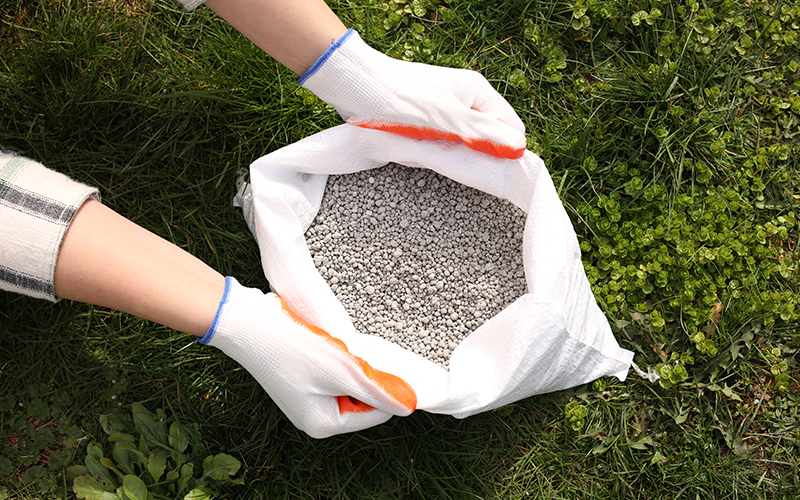
DAP fertilizer is a granular compound fertilizer that supplies nitrogen and phosphorus in a single product. Manufacturers make it by reacting ammonia with phosphoric acid. The result is a hard, free-flowing granule that stores well and spreads evenly.
DAP accounts for the largest share of the world’s processed phosphate trade. Its appeal is simple. It packs more plant food into each tonne than almost any other solid fertilizer, so buyers pay less to ship each unit of nutrient.
What Does 18-46-0 Actually Mean?
The three numbers show the percentage by weight of nitrogen (N), phosphate (P₂O₅), and potash (K₂O). DAP contains 18% total nitrogen, 46% available phosphate, and no potassium. Commercial contracts state the guaranteed minimum separately, usually 17.5% nitrogen and 46% phosphate.
A 50 kg bag of DAP therefore holds 9 kg of nitrogen and 23 kg of P₂O₅. Together that is 64 kg of nutrients per 100 kg of product, which ranks among the highest of any common solid fertilizer.
The final zero matters for planning. DAP supplies no potassium, no sulfur, and no calcium. Growers who need those nutrients must add a second product, such as muriate of potash, sulfate of potash, or ammonium sulfate.
DAP Fertilizer Full Form and Chemical Formula
The full form of DAP is diammonium phosphate. Its chemical formula is (NH₄)₂HPO₄, and its molar mass is 132.06 g/mol.
Each molecule holds two ammonium ions and one hydrogen phosphate ion. The nitrogen sits in the ammonium form, so roots can absorb it straight away. Soil bacteria then convert part of that ammonium into nitrate over the following weeks. This gives crops a short burst of nitrogen followed by a steadier supply.
The phosphorus dissolves quickly and forms a concentrated nutrient pocket around each granule. Roots grow toward that pocket, which is exactly the effect a starter fertilizer should produce.
Key Physical and Chemical Properties at a Glance
The table below lists the properties that matter most in the field and in the warehouse.
| Property | Typical Value |
| Appearance | Brown, grey, or black granules |
| Granule size | 1–4 mm, with 90% or more within range |
| Total nitrogen | 17.5% minimum |
| Available phosphate (P₂O₅) | 46% minimum |
| Water solubility | About 58 g per 100 mL of water at 20 °C |
| pH around the dissolving granule | 7.5 to 8.0 (alkaline) |
| Salt index | About 30 to 34 |
| Bulk density | 0.9 to 1.0 tonnes per cubic metre |
| Moisture content | 2.5% maximum |
| Critical relative humidity | Around 70% at 30 °C |
Two of these values drive most handling decisions. The alkaline pH around the granule explains why DAP behaves differently from MAP on certain soils. The critical relative humidity explains why DAP cakes in a damp shed but stays loose in a dry one.
How Is DAP Fertilizer Made?
Manufacturers produce DAP by neutralising phosphoric acid with ammonia at a molar ratio of about two to one. The process runs in five main stages.
Stage one is phosphoric acid production. Plants grind phosphate rock and treat it with sulfuric acid. This wet process yields phosphoric acid and a gypsum by-product. The purity of the rock at this stage sets the heavy metal content of the finished fertilizer, so the rock source matters to the buyer.
Stage two is the reaction. Ammonia and phosphoric acid meet in a pre-neutraliser or pipe reactor. The reaction gives off a large amount of heat, and operators control the ratio closely. Too little ammonia leaves free acid in the product, while too much drives off ammonia gas and wastes it.
Stage three is granulation. The hot slurry enters a rotating drum, where it coats recycled fines and builds up into round granules. Granule strength is set here, and strong granules survive bulk handling without turning to dust.
Stage four is drying and screening. A rotary dryer pulls moisture down to 2.5% or less. Screens then split the flow into three streams: on-size product, oversize lumps, and undersize fines. The oversize goes to a crusher and the fines return to the drum.
Stage five is cooling and coating. The product passes through a cooler and receives a light anti-caking coating. This step protects the granules during long ocean voyages and months of warehouse storage.
What Are the Main Uses of DAP Fertilizer?
Most DAP goes into the ground as a basal fertilizer for field crops. The rest splits between fertilizer blending, fertigation, and a small group of industrial uses. Each application places different demands on granule size, purity, and solubility.
Basal and Starter Application in Field Crops
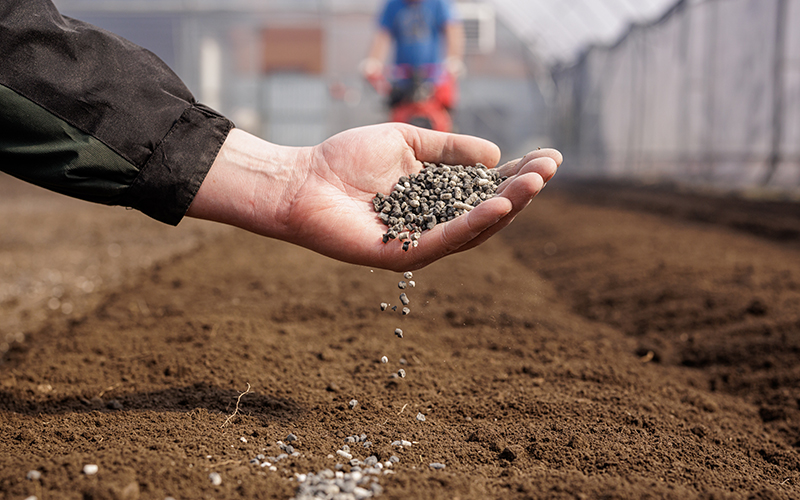
DAP works best as a basal dressing applied at or just before sowing. Growers place it in the seed row or spread it and work it into the topsoil.
The reason is agronomic. Phosphorus barely moves in soil, so it must sit where young roots can reach it. Applying DAP later, once the crop is established, wastes most of the phosphorus value.
The nitrogen in DAP covers only the first part of the crop’s needs. A typical programme applies the full phosphorus dose plus a third to a half of the nitrogen dose through DAP at planting. The rest of the nitrogen follows later as urea or ammonium sulfate, split across the growing season.
Use in NPK Blending and Bulk Blends
Blending plants use DAP as the phosphorus base for bulk blended NPK products. They mix it with potash, urea, and micronutrients to hit a target grade such as 15-15-15 or 20-10-10.
Granule size decides whether a blend holds together. If DAP granules are larger or denser than the potash beside them, the mixture separates during loading, transport, and spreading. Fields then receive stripes of nitrogen and stripes of phosphorus instead of an even blend.
Blenders therefore ask for tight size guarantees rather than a broad 1–4 mm range. Buyers who supply blending plants should confirm the size distribution before shipment, not after.
Fertigation and Liquid Formulations
DAP dissolves readily, so growers can feed it through drip and sprinkler systems. The practice is common on vegetables, orchards, and greenhouse crops.
One caution applies. DAP raises the pH of the solution, and hard irrigation water carries dissolved calcium. High pH plus calcium forms calcium phosphate, which is not soluble. That solid settles in tanks and blocks drip emitters.
Growers on hard water usually inject an acid ahead of the fertilizer, or they switch to MAP or MKP for fertigation. Suppliers who explain this before the sale avoid a clogged system and an unhappy customer.
Non-Agricultural Uses (Fire Retardants, Food & Fermentation)
Outside farming, DAP appears in three settings. Fire retardant formulations use ammonium phosphates because they release ammonia and form a char layer that starves a flame. Winemakers and brewers add DAP as a yeast nutrient, since fermenting yeast needs a nitrogen source. Some metal treatment and match manufacturing processes also use it.
These markets do not accept fertilizer-grade material. Food and beverage users require food-grade DAP that meets a recognised purity standard, and buyers should never substitute one grade for the other.
What Are the Benefits of DAP Fertilizer?
DAP earns its market share through six practical advantages. Most of them show up in the accounts as much as in the field.
It delivers two nutrients in one pass. Growers apply nitrogen and phosphorus together, which saves a spreading operation, fuel, and labour at the busiest time of the season.
It drives early root growth. Phosphorus builds the root system and transfers energy inside the plant. A crop with a strong root system in week three chases water and nutrients better for the rest of the season.
It carries a high nutrient density. At 64 units of nutrient per 100 kg, DAP moves more plant food per container than lower-analysis products. Freight, handling, and storage costs all fall on a per-nutrient basis.
It has excellent physical properties. Good DAP is hard, round, dust-free, and free-flowing. It spreads evenly across a wide boom and does not bridge in a hopper.
It buffers acidic soil near the granule. The dissolving granule creates a zone at pH 7.5 to 8.0. On acidic soils, this raises phosphorus availability exactly where the roots are working.
It is available everywhere. Producers in China, Morocco, Saudi Arabia, Russia, and the United States all export DAP. Wide supply keeps the market liquid and gives buyers real alternatives during a shortage.
Which Crops Benefit Most from DAP?
Crops with a high phosphorus demand in early growth gain the most from DAP. Cereals, oilseeds, pulses, and root vegetables all fall into this group. The table below gives common starting ranges.
| Crop Group | Examples | Common Basal Rate | Timing |
| Cereals | Wheat, maize, rice | 100–150 kg/ha | At sowing |
| Oilseeds and pulses | Soybean, mustard, groundnut | 75–125 kg/ha | At sowing |
| Root and bulb vegetables | Potato, onion, carrot | 150–250 kg/ha | Before planting |
| Fruiting vegetables | Tomato, chilli, cabbage | 125–200 kg/ha | Before transplanting |
| Cash crops | Cotton, sugarcane, tobacco | 125–200 kg/ha | At planting |
| Tree and plantation crops | Citrus, mango, coffee | 150–300 g per tree per year | Split before flowering |
These figures are starting points only. A soil test should set the final rate, because soils differ widely in available phosphorus.
Two crop groups need extra thought. Legumes such as soybean, groundnut, and chickpea fix their own nitrogen, so they need the phosphorus in DAP more than the nitrogen. Chloride-sensitive crops such as tobacco, grapes, and potatoes tolerate DAP well, since DAP carries no chloride at all. For those crops, growers usually pair DAP with sulfate of potash rather than with a chloride source. The potassium chloride buying guide covers that trade-off in detail.
How and When Should DAP Be Applied?
Timing and placement decide how much of the phosphorus a crop actually recovers. Method matters less than getting the granule into moist soil close to the root zone.
Application Methods (Broadcasting / Banding / Seed-Row / Fertigation / Drone)
Five methods cover almost all commercial use.
Broadcasting spreads DAP evenly across the field surface before tillage. It suits large grain fields and simple equipment, but the fertilizer must be worked into the soil afterwards to limit ammonia loss.
Banding places DAP in a narrow strip five centimetres to the side of the seed row and slightly below it. This concentrates the phosphorus where roots will find it and gives the best recovery rate on low-phosphorus soils.
Seed-row placement drops fertilizer and seed through the same opener. It is efficient, yet it carries the highest risk of seedling injury and demands strict rate control.
Fertigation dissolves DAP into irrigation water. It fits vegetables, orchards, and greenhouse production, and it allows small, frequent doses.
Drone and mechanical top-dressing apply granules to a standing crop. This method suits nitrogen products far better than DAP, because surface phosphorus rarely reaches the root zone in time.
Timing by Growth Stage
Phosphorus should be in place before the crop needs it. Field data consistently show the highest response when DAP goes in at or before sowing.
For short-season crops such as wheat, mustard, or mung bean, a single basal application covers the whole cycle. For long-season crops such as sugarcane, cotton, or banana, growers apply the full phosphorus dose at planting and split the remaining nitrogen into two or three later doses.
Late phosphorus application has one narrow use. On soils that test very low in phosphorus, a side-dressed band during early vegetative growth can still lift yield. Beyond that stage, the return rarely covers the cost.
Placement Warning — Why DAP Should Not Touch the Seed
DAP should never sit in direct contact with seed. The reason is chemical, not physical.
As a DAP granule dissolves, it lifts the pH of the surrounding soil water to about 8. At that pH, ammonium converts to free ammonia. Free ammonia is toxic to germinating seed and to fine root hairs, and the damage shows up as patchy emergence one to two weeks after sowing.
The safe rule is five centimetres of soil between fertilizer and seed, placed to the side and below. The risk climbs on sandy soils, on dry seedbeds, and at high application rates. Sensitive crops such as canola, cotton, and onion need the widest margin.
What Are the Limitations and Risks of DAP?
DAP is not the right choice everywhere. Six limitations deserve attention before an order is placed.
Ammonia loss on alkaline soils. Surface-applied DAP on calcareous or high-pH soils can lose a meaningful share of its nitrogen to the air within days. Incorporation or irrigation immediately after spreading prevents most of that loss.
Seedling injury. The free ammonia effect described above damages young plants whenever placement or rate control fails.
No potassium, sulfur, or calcium. DAP covers two nutrients out of the many a crop needs. Any complete programme requires additional products.
Phosphorus fixation. In strongly alkaline soils, phosphorus binds with calcium. In strongly acidic soils, it binds with iron and aluminium. Either way, part of the applied phosphorus becomes unavailable, and banding limits this loss better than broadcasting.
Moisture sensitivity. DAP absorbs water from the air once relative humidity passes about 70%. Wet granules cake into hard lumps that will not flow through a spreader.
Heavy metal content. Phosphate rock naturally contains cadmium, and the level varies by deposit. The European Union limits cadmium in phosphate fertilizers to 60 mg per kg of P₂O₅, and other markets set their own caps. Buyers shipping into regulated markets must confirm the figure on the certificate of analysis before loading.
DAP vs MAP: Which Phosphate Source Should You Buy?
DAP and MAP both supply nitrogen and phosphorus, and both come from ammonia and phosphoric acid. The difference lies in how much ammonia the manufacturer adds, and that single change alters how each product behaves.
Buyers should note that MAP reaches the market in two forms. Granular fertilizer grade goes into the ground like DAP. Technical grade is a white crystalline powder of 99% purity, made for dissolving in water. The table below compares DAP with the technical grade, since that is the form most often bought alongside DAP rather than instead of it.
| Factor | DAP (18-46-0) | MAP, technical grade (12-61-0) |
| Chemical formula | (NH₄)₂HPO₄ | NH₄H₂PO₄ |
| Physical form | Brown granules, 1–4 mm | White crystalline powder |
| Total nitrogen | 18% | 12% minimum |
| Available phosphate | 46% | 61% minimum |
| Purity | Fertilizer grade | 99% minimum |
| pH of solution | 7.5 to 8.0 (alkaline) | 4.4 to 4.8 (acidic) |
| Water-insoluble matter | Present, as specified | 0.2% maximum |
| Moisture | 2.5% maximum | 0.2% maximum |
| Fertigation and foliar use | Not suitable | Suitable |
| Typical application | Broadcast or banded at planting | Drip, sprinkler, and foliar feeding |
The practical guidance follows from the last two rows. The two products serve different jobs rather than competing for the same one. DAP is the bulk phosphorus source that goes into the soil at planting, and it costs far less per unit of nutrient. Technical MAP is the phosphorus source that goes through an irrigation line, and its price reflects the purity that fertigation demands.
The pH row explains a second difference. DAP creates an alkaline zone around each granule, which suits acidic and neutral soils. The acidic reaction of MAP keeps phosphorus available for longer on alkaline and calcareous soils, and it also helps keep drip lines clear of scale.
Most programmes therefore use both. DAP covers the base phosphorus requirement at planting, while technical MAP delivers phosphorus at specific growth stages through the irrigation system.
How to Evaluate DAP Quality Before You Buy?
Quality control starts with the specification sheet and ends with an independent inspection at the port. The table below shows the parameters a buyer should require in the contract.
| Parameter | Standard Requirement | Why It Matters |
| Total nitrogen | 17.5% minimum | Confirms the grade is genuine |
| Available P₂O₅ | 46% minimum | The core nutrient value |
| Water-soluble P₂O₅ | 41% minimum | Shows how much phosphorus acts quickly |
| Moisture | 2.5% maximum | Controls caking during shipment |
| Granule size 1–4 mm | 90% minimum | Protects spreading and blending accuracy |
| Granule hardness | 2 kgf minimum | Predicts dust levels after handling |
| Free acid | Low, as specified | High free acid corrodes bags and equipment |
| Cadmium and other heavy metals | Per destination limits | Determines market access |
Three checks turn that specification into real protection. First, the supplier should issue a certificate of analysis for each production batch, not a generic document reused across shipments. Second, an independent inspection agency should draw samples at the loading port and test them against the contract. Third, the buyer should hold a sealed retention sample until the cargo clears customs, which settles most disputes quickly.
Buyers should also look past the paperwork to the supply chain. A steady phosphate rock source, a documented granulation process, and a clear shipping record all reduce the risk of batch-to-batch variation. Companies sourcing across several product lines often prefer a single partner for their fertilizer procurement, because consistent documentation and one point of contact simplify the whole process.
DAP Fertilizer Market and Price Factors
DAP prices move with production costs and trade policy rather than with farm demand alone. Five forces set the level.
Raw material costs form the base. Phosphate rock, sulfur, and ammonia together account for most of the production cost. Ammonia in turn tracks natural gas prices, so an energy shock reaches the fertilizer market within weeks.
Export policy can override everything else. Major producing countries adjust export quotas, licences, and duties to protect their own farmers, and a single policy change can reprice the market.
Ocean freight and container availability decide the delivered cost. On a low-value bulk commodity, freight often makes up a large share of the landed price.
Seasonality follows the planting calendar. Prices tend to firm ahead of the main sowing seasons in the northern and southern hemispheres, then ease afterwards.
Currency movement affects importers directly, since most international fertilizer trade settles in US dollars.
One habit helps buyers compare offers properly. Rather than comparing price per tonne, they should calculate the cost per unit of nutrient. A tonne of DAP at 64 nutrient units and a tonne of a lower-analysis product at 40 units are not comparable, even at the same headline price, once freight and handling enter the calculation.
Packaging, Storage, and Shipping Tips For DAP Fertilizer
DAP travels well when it stays dry. Almost every quality complaint in the trade traces back to moisture reaching the product somewhere between the plant and the field.
Packaging comes in three standard formats. Woven polypropylene bags of 25 kg or 50 kg with an inner polyethylene liner suit retail distribution. Jumbo bags of 1,000 kg or 1,250 kg suit blending plants and large farms. Bulk shipment in a vessel hold gives the lowest cost per tonne for cargoes above a few thousand tonnes.
Storage requires a dry, covered building with a sealed floor. Pallets or timber dunnage keep bags off the ground, and stacks should stay away from exterior walls where condensation forms. Most suppliers limit stack height to protect the bags at the bottom from compaction. Outdoor storage needs waterproof sheeting with the edges tucked well under.
Container loading benefits from a paper or plastic liner, because steel container walls sweat during ocean transit. Desiccant bags inside the container absorb the moisture that sweating releases.
Regulatory status is straightforward. DAP is not classified as a dangerous good for sea transport, unlike ammonium nitrate, so it moves under standard cargo procedures. Shippers should still confirm the current requirements with the carrier and the destination authority.
Shelf life is effectively unlimited under dry conditions. DAP does not lose nutrient value with age. Only water damages it, which is why every storage rule points back to the same thing.
FAQs
What is the NPK ratio of DAP fertilizer?
The NPK ratio of DAP is 18-46-0. That means 18% total nitrogen, 46% available phosphate as P₂O₅, and no potassium. Supply contracts normally guarantee 17.5% nitrogen and 46% phosphate as the minimum.
How much DAP is needed per acre/hectare?
Common rates run from 75 to 250 kg per hectare, which is roughly 30 to 100 kg per acre. Cereals usually take 100 to 150 kg per hectare, while vegetables take more. A soil test should always set the final rate.
Is DAP fertilizer water soluble?
Yes. About 58 grams of DAP dissolve in 100 millilitres of water at 20 °C. This makes it suitable for fertigation, although hard water can cause calcium phosphate to precipitate in the system.
Which is better, DAP or MAP?
Neither is better, because they do different jobs. DAP is a granular product for soil application and costs less per unit of nutrient. Technical grade MAP at 12-61-0 is a 99% pure crystalline powder for fertigation and foliar feeding. Many programmes use both.
Can DAP be mixed with urea?
Yes, and the combination is standard practice. DAP supplies the phosphorus and part of the nitrogen, while urea covers the remaining nitrogen. The two should be blended shortly before use, since the mixture picks up moisture faster than either product alone.
How long does DAP last in the soil?
The nitrogen becomes available within days to a few weeks. The phosphorus stays in the soil far longer, but part of it gradually binds to calcium, iron, or aluminium and becomes harder for plants to reach. Most of the crop benefit occurs in the first season.
What is the shelf life of DAP in storage?
DAP has no fixed expiry date. Stored dry and off the ground, it holds its full nutrient value for years. Moisture is the only real threat, because it causes caking rather than nutrient loss.
Conclusion
DAP fertilizer remains the workhorse of global phosphate supply for good reason. It combines the highest practical nutrient density with reliable physical properties and worldwide availability. Used as a basal fertilizer on neutral to acidic soils, placed away from the seed, and stored dry, it delivers a strong return on a modest investment.
The buying side deserves the same attention as the agronomy. Verified specifications, batch-level certificates of analysis, independent loading inspections, and sound packaging protect the value of every tonne shipped.
SUMEC Chemical supplies DAP together with a full range of nitrogen, phosphate, and potash fertilizers to importers, blenders, and distributors worldwide. Every shipment carries batch-level documentation, and the export team handles inspection, packaging, and port logistics as part of the order.
Buyers who need a DAP specification sheet, a sample analysis, or a current quotation for their market can contact the SUMEC Chemical team directly. A short conversation about soil type, crop plan, and destination requirements is usually enough to confirm the right grade and shipment format.