

Ammonium Sulfate (21-0-0) for Agriculture: A Manufacturer’s Reference
Most nitrogen fertilizers deliver one nutrient. Ammonium sulfate delivers two.
Each tonne carries about 21% nitrogen and about 24% sulfur. Both nutrients arrive in forms that plant roots can take up directly. This is why the product holds a steady place in fertilizer programs across Asia, Africa, and Latin America, even though its nitrogen content is lower than urea.
Buyers ask a consistent set of questions before they order. How much nitrogen and sulfur does the product guarantee? Should the shipment be crystal or granular? Which soils suit it, and which do not? What specifications belong in the contract? And can the supplier deliver the same quality on every batch?
This guide answers those questions from two sides. The first half covers how ammonium sulfate behaves in soil and on crops. The second half covers what manufacturers control, what documents matter, and what importers should confirm before a vessel loads.
What Is Ammonium Sulfate Fertilizer?
Ammonium sulfate is an inorganic nitrogen fertilizer that also supplies sulfur. It is a salt formed from ammonia and sulfuric acid. In the field it works as a straight nitrogen source, and in a blending plant it works as a raw material.
The product is sold in two physical forms: crystal and granular. Both carry the same chemistry. They differ in particle size, handling behaviour, and end use.
Chemical Formula, Molar Mass, and Basic Properties
The chemical formula of ammonium sulfate is (NH₄)₂SO₄. Its molar mass is 132.14 g/mol, and its CAS number is 7783-20-2.
Standard material is a white to off-white solid with no strong odour. Some suppliers also offer colour-coded grades, such as blue or green, for markets that use colour to separate products in storage. Colour comes from an added dye and does not change nutrient content.
The product dissolves readily in water. Solubility is commonly reported at roughly 70 to 75 grams per 100 millilitres at room temperature, and it rises with temperature. Ammonium sulfate does not melt cleanly when heated; it breaks down at high temperature instead.
| Property | Typical value |
| Chemical formula | (NH₄)₂SO₄ |
| Molar mass | 132.14 g/mol |
| CAS number | 7783-20-2 |
| Appearance | White crystal or granule |
| Nitrogen | About 21% |
| Sulfur | About 24% |
| Water solubility (room temperature) | About 70–75 g / 100 mL |
| Chloride | Not a component of the compound |
| Critical relative humidity | About 80% at 30 °C |
The last row matters more than it looks. A critical relative humidity near 80% means the product resists moisture better than several other nitrogen fertilizers. It still needs dry storage, but it holds up well in humid ports when the packaging stays sealed.
What Does 21-0-0-24S Mean?
The numbers describe nutrient content by weight. Ammonium sulfate contains about 21% nitrogen, 0% phosphate (P₂O₅), and 0% potash (K₂O). The 24S refers to about 24% sulfur.
Two points deserve attention. First, the third figure is zero because the product supplies no phosphorus and no potassium at all. It is a straight fertilizer, not a compound one. Second, sulfur sits outside the standard three-number grade. Some markets print it as 21-0-0-24S, others print 21-0-0 alone and declare sulfur separately on the label.
Guaranteed minimums vary by grade and by contract. Nitrogen is often guaranteed at 20.5% or 21% minimum, and sulfur at 23.5% or 24% minimum. Buyers should treat the certificate of analysis as the binding figure rather than the trade name.
The product travels under several names. Ammonium sulfate is the international spelling, ammonium sulphate is the British spelling, and both refer to the same compound. Trade documents often shorten it to AS or AMS. Older agricultural literature calls it sulphate of ammonia.
How Is Ammonium Sulfate Manufactured?
Ammonium sulfate reaches the market through more than one production route. All routes end with the same compound, but they differ in scale, purity profile, and the impurities that need removing.
Direct Neutralization of Ammonia and Sulfuric Acid
The synthetic route reacts ammonia with sulfuric acid. The reaction is direct and gives a high yield.
Production runs through several stages. Ammonia and sulfuric acid meet in a neutralization step. The resulting solution passes through crystallization, where solid ammonium sulfate forms. Centrifuges then separate the crystals from the mother liquor. Drying removes residual moisture, and screening sorts the product into size fractions.
Plants that want a larger particle send the fine crystal on to a granulation or compaction step. That extra stage produces the granular grade used for direct field spreading.
By-Product and Co-Product Production Routes
A large share of world supply arrives as a by-product or co-product of other industrial processes. Caprolactam production, the starting point for nylon, is the best-known example. Ammonium sulfate forms alongside the main product and is recovered, purified, and sold as fertilizer.
Coke oven gas treatment is another established route. Ammonia recovered from the gas stream reacts with sulfuric acid to give ammonium sulfate.
Production route is a useful piece of background information, but it does not decide agricultural performance on its own. Two shipments from different routes can perform identically if both meet the same specification. What matters is the tested result: nitrogen content, sulfur content, moisture, free acidity, and particle size. Buyers who focus on the certificate of analysis rather than on the process name make better comparisons.
How Manufacturers Control Product Consistency
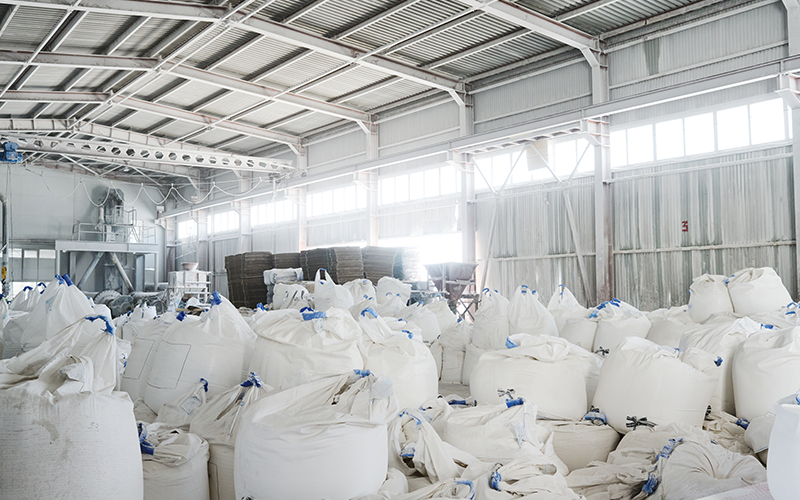
Consistency comes from measuring the same parameters on every batch. Four areas carry most of the risk.
Nutrient content. Nitrogen and sulfur are checked against the contract minimum on each production lot. A shipment that reads below the guarantee costs the buyer real nutrient value per tonne.
Moisture and free acidity. Excess moisture causes caking during transit and storage. Free acidity, carried over from sulfuric acid, can corrode equipment and damage packaging over time. Both are held to a stated maximum.
Particle size, dust, caking, and flowability. These physical properties decide whether the product spreads evenly, blends without separating, and arrives without lumps. Screening and anti-caking treatment control them.
Batch testing and traceability. Each lot carries its own analysis and lot reference. Traceability lets a buyer connect a delivered bag back to a production record if a question comes up later.
How Does Ammonium Sulfate Work in Agriculture?
Ammonium sulfate feeds crops through two nutrients and changes soil chemistry through one reaction. Understanding all three effects explains both its strengths and its limits.
Ammonium Nitrogen for Crop Growth
Ammonium sulfate supplies nitrogen in the ammonium form, written NH₄⁺. Roots can absorb this form directly.
Ammonium also carries a positive charge, so soil particles hold it in place. That reduces early leaching losses compared with nitrate nitrogen, which moves freely with water. Over days to weeks, soil bacteria convert ammonium to nitrate through nitrification. Crops then take up both forms.
Nitrogen drives leaf and stem growth. It sits at the centre of chlorophyll and of the amino acids that build plant protein. A crop short of nitrogen shows pale older leaves, thin stems, and reduced yield potential.
Sulfate Sulfur for Plant Nutrition
The sulfur in ammonium sulfate comes as sulfate, written SO₄²⁻. This is the form plants absorb.
Elemental sulfur products must first be oxidised by soil microbes before crops can use them, and that process takes time and warmth. Sulfate sulfur skips that step. It is available to the crop as soon as it dissolves.
Sulfur supports protein formation, enzyme activity, and oil synthesis. It also affects quality traits that buyers pay for, including protein content in cereals and oil content in oilseeds. Sulfur deficiency often appears first on young leaves, which separates it visually from nitrogen deficiency.
The Effect of Ammonium Sulfate on Soil pH
Ammonium sulfate has an acidifying effect on soil. The acidity comes from nitrification, not from the fertilizer granule itself. When bacteria convert ammonium to nitrate, they release hydrogen ions, and hydrogen ions lower pH.
The effect is real but gradual. Published lime equivalence figures put the acidity of 100 kg of ammonium sulfate at roughly 110 kg of agricultural limestone. Actual movement in field pH depends on soil texture, buffering capacity, organic matter, and rainfall. Sandy soils shift faster than clay soils.
Two conclusions follow. On alkaline soils, the effect can be useful over several seasons. On soils already acidic, it is a cost that needs monitoring. Ammonium sulfate is a fertilizer with a side effect on pH, not a soil amendment for correcting alkalinity on its own.
What Are the Main Agricultural Benefits of Ammonium Sulfate?
Ammonium sulfate earns its place in a program for four practical reasons. Each is an agronomic advantage under the right conditions, not a guarantee of higher yield.
Supplies Nitrogen and Sulfur in One Fertilizer
One product covers two nutrients. That simplifies purchasing, storage, and application for growers who need both.
Sulfur demand has risen in many regions as industrial sulfur deposition from the air has fallen. Crops that once received incidental sulfur now need it applied. Ammonium sulfate meets that need without adding a separate product to the program.
Supports Fertilizer Programs with Low Phosphorus and Potassium Needs
Some fields already hold adequate phosphorus and potassium. Applying a compound fertilizer there adds nutrients the crop does not need and cost the grower does not recover.
A straight product solves that. Ammonium sulfate lets an agronomist raise nitrogen and sulfur while leaving phosphorus and potassium untouched. Where potassium is also required, it can be paired with a separate potash source such as MOP or SOP and dosed independently.
Offers High Water Solubility and Flexible Application
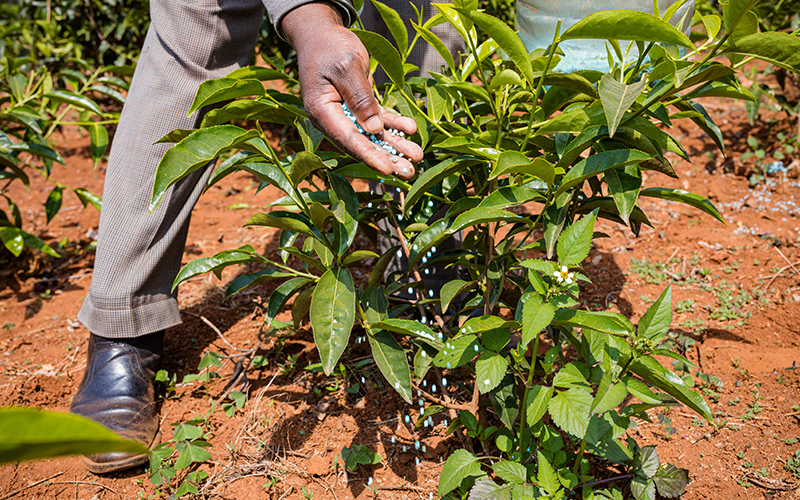
The product dissolves quickly and completely in water. That supports several application methods, including solid broadcasting, topdressing, and dissolved application where the grade and the irrigation system allow it.
Buyers planning to dissolve the product should confirm the water-insoluble content and purity grade first. Field-grade material is made for soil application, and standards for dissolved use are stricter.
Works for Direct Application and Fertilizer Blending
Ammonium sulfate serves as a finished fertilizer and as an ingredient. Blending plants use it to raise the nitrogen and sulfur content of bulk-blended NPK grades.
Blending success depends on physical match. Granules of similar size, density, and hardness stay mixed during handling. Poorly matched materials separate in the spreader, and the field receives an uneven application.
Which Soils and Crops Are Suitable for Ammonium Sulfate?
Soil pH is the first filter. Crop nutrient demand is the second. Both should be checked against a current soil test before an order is placed.
Use in Neutral and Alkaline Soils
Neutral and alkaline soils are where ammonium sulfate fits most comfortably. These soils can absorb the acidifying effect, and in some cases benefit from it, because a lower pH improves the availability of phosphorus and micronutrients such as iron, manganese, and zinc.
One risk needs managing. On high-pH and calcareous soils, ammonium fertilizer left on a dry surface can lose nitrogen to the air as ammonia gas. The remedy is straightforward: incorporate the product into the soil, or apply before irrigation or expected rainfall. Nitrogen that moves into the soil profile stays available to the crop.
Use in Acidic Soils
Ammonium sulfate can be used on acidic soils, but it requires planning. Repeated applications push pH further down, and low pH reduces nutrient availability and can release aluminium into the soil solution.
Growers in this situation should test the soil before the season, control the rate, and monitor pH over several years. A liming program may be needed to offset the effect. Where the soil is already well below the crop’s preferred range, another nitrogen source is usually the better choice.
Common Crop Applications
Ammonium sulfate is used across a wide range of cropping systems.
Cereals such as wheat, maize, and barley. These crops need nitrogen through the growing season, and sulfur supports grain protein. Ammonium sulfate is commonly used as part of a split nitrogen program.
Rice and other flooded crops. In waterlogged soil, nitrate nitrogen is vulnerable to loss through denitrification. The ammonium form is more stable under those conditions, which is why ammonium sulfate has a long history in paddy systems.
Oilseeds and sulfur-demanding crops such as canola, onion, and garlic. These crops take up more sulfur per tonne of yield than cereals do. Sulfur affects both yield and quality traits in this group.
Pasture, turf, and selected horticultural crops. Managed grassland and professional turf use ammonium sulfate for nitrogen and sulfur. It is also chloride-free, which suits crops sensitive to chloride, including tea, tobacco, and certain fruit crops.
When Ammonium Sulfate May Not Be the Best Choice
Four situations point toward a different product.
The soil is already clearly acidic, and no liming program is planned. The crop’s main shortfall is a nutrient other than nitrogen or sulfur, such as phosphorus or potassium. Freight distance is long enough that cost per unit of nitrogen outweighs the value of the sulfur, since a tonne of ammonium sulfate carries less nitrogen than a tonne of urea. Or no soil test and no fertilizer plan exist yet, in which case testing should come before purchasing.
Crystal vs. Granular Ammonium Sulfate: What Is the Difference?
The two forms share the same chemistry and differ in particle size. That single difference changes how each one handles, spreads, and dissolves.
Crystal Ammonium Sulfate
Crystal grade is the material as it comes from crystallization and drying, with no granulation step. Particles are fine, and size typically falls below about 2 mm.
The fine particle size gives a fast dissolution rate. This suits solution preparation and suits use as a raw material in further fertilizer manufacturing.
Crystal grade has two handling drawbacks. It generates more dust during loading and spreading, which means product loss and a less pleasant working environment. It also flows less evenly through mechanical spreaders, so broadcast coverage across a wide field is harder to keep uniform.
Granular Ammonium Sulfate
Granular grade is produced by granulating or compacting the crystal into larger particles, commonly in ranges such as 2–4 mm and 5–7 mm.
Larger, harder particles flow freely and spread evenly. They also throw a wider, more consistent pattern from a broadcast spreader. Dust is much lower, and the product resists breaking down during repeated handling.
These properties make granular grade the standard choice for direct field application and for dry bulk blending. Particle hardness matters here, since granules that crumble during transfer turn back into dust and fines.
How Buyers Can Select the Right Form
| Factor | Crystal | Granular |
| Particle size | Fine, generally under 2 mm | Commonly 2–4 mm or 5–7 mm |
| Dust level | Higher | Lower |
| Flowability | Moderate | Good |
| Dissolution speed | Faster | Slower |
| Blending suitability | Limited; separates from granular materials | Good with size-matched granular products |
| Direct field application | Less even coverage | Standard choice |
| Packaging and handling | Needs tight moisture protection | Handles repeated transfer well |
The decision follows the end use. Operations that dissolve the product or feed it into further manufacturing generally choose crystal. Operations that spread it on a field or blend it into an NPK grade generally choose granular. Buyers serving both channels sometimes order both forms under one contract.
How Should Ammonium Sulfate Fertilizer Be Applied?
Application decisions belong to the agronomist on the ground. The points below describe common practice rather than a fixed recommendation.
Determine the Rate Through Soil and Crop Requirements
No single rate suits every crop and every field. Published figures vary widely because soils, yields, and climates vary widely.
Rate should be set from four inputs: a current soil test, the target yield, the previous crop and its residues, and local agronomic guidance or extension recommendations. Sulfur rate deserves its own calculation, since a rate chosen to meet the nitrogen requirement may not match the sulfur requirement.
Common Application Methods
Ammonium sulfate is applied through several standard methods.
Basal or pre-plant application places nutrients in the soil before or at sowing. Topdressing and sidedressing supply nitrogen during the growing season, matched to crop demand. Direct broadcasting spreads the product across the field surface, usually followed by incorporation or irrigation. Fertilizer blending combines it with other granular materials into a custom grade. Dissolved application is possible where product quality, filtration, and system design all allow it.
Timing, Placement, and Moisture Management
Timing should follow crop demand. Nitrogen and sulfur uptake peak during active vegetative growth, so applications are usually scheduled to arrive ahead of that window rather than long before it.
Placement and moisture control losses. Product incorporated into the soil, or watered in shortly after application, is far less exposed to ammonia loss than product left on a dry surface. Applications made just before heavy rain carry the opposite risk, since excess water moves nutrients below the root zone.
Compatibility and Application Precautions
Three precautions prevent most problems.
Ammonium sulfate should not be mixed or stored in contact with lime or strongly alkaline materials. Alkaline conditions convert ammonium to ammonia gas, and the nitrogen escapes before the crop can use it.
Physical compatibility should be checked before blending. Particle size, density, and moisture behaviour all affect whether a blend stays uniform, and blends are best applied soon after mixing rather than stored for long periods.
Rates should stay within plan. Over-application raises the salt load around germinating seeds and young roots, and repeated over-application accelerates the drop in soil pH.
Which Ammonium Sulfate Fertilizer Specifications Should Buyers Check?
A specification turns a product name into an enforceable agreement. These are the items worth writing into the contract.
Chemical Specifications
| Parameter | What it controls |
| Total nitrogen | Nutrient value per tonne |
| Ammoniacal nitrogen | Confirms nitrogen is present as ammonium |
| Sulfur | The second nutrient, often the reason for choosing the product |
| Moisture | Caking risk in transit and storage |
| Free acidity | Corrosion and packaging damage risk |
| Purity or other agreed parameters | Suitability for dissolved use or further processing |
Each figure should appear as a stated minimum or maximum, not as a typical value. A typical value is a description. A guaranteed value is a commitment.
Physical Specifications
Physical properties decide field and plant performance, so they belong in the contract too.
The list covers form (crystal or granular), particle-size distribution, colour and appearance, flowability, and dust and caking condition. Particle-size distribution matters most for blending operations, because a size mismatch between blend components causes separation no chemical specification can fix.
Quality Documents
Five documents support a shipment.
The certificate of analysis reports the tested results for the specific lot. The safety data sheet covers handling, storage, and emergency information. The product specification sheet states the agreed ranges. Batch and origin information supports traceability. Finally, some destination markets require specific inspection or import certificates, and those requirements should be confirmed before production rather than after.
How to Evaluate an Ammonium Sulfate Manufacturer or Supplier
Product quality and supply reliability are separate questions. A buyer needs satisfactory answers to both.
Confirm the Product Source and Production Route
A supplier should be able to state where the material is produced and by which route. This information supports quality expectations and helps with import documentation in markets that ask about origin.
Compare Specifications Across Batches
One good certificate of analysis proves one good lot. Consistency shows up when several lots are compared side by side. Buyers placing repeat orders should ask for analyses from different production periods and check how tightly the figures cluster.
Review Testing, Inspection, and Traceability
Testing arrangements should be agreed in advance. That includes which parameters are tested, at what stage, and whether third-party inspection at loading is required. Lot-level traceability closes the loop by linking delivered goods back to production records.
Assess Supply Capacity and Delivery Reliability
Capacity questions matter for buyers who order seasonally. Fertilizer demand concentrates into short windows, and a supplier who can produce the volume but cannot deliver within the planting window has not solved the problem.
Delivery reliability covers production lead time, port options, loading method, and the supplier’s experience with the destination market’s procedures.
Confirm Packaging and Documentation Before Ordering
Packaging and documentation are usually settled last and cause the most avoidable delays. Bag type, print, net weight, palletisation, and the full document set should all be confirmed in writing before production starts. SUMEC Chemical handles these details as part of order preparation, and available specifications for its fertilizer product range can be confirmed with the export team.
How Should Ammonium Sulfate Fertilizer Be Packaged, Stored, and Shipped Internationally?
Ammonium sulfate handles international transit well when it stays dry and sealed. Most quality complaints trace back to moisture rather than to chemistry.
Common Packaging Options
Three formats cover most trade. Small bags, commonly 25 kg and 50 kg, suit distribution to farms and retail channels. Bulk bags, often around one tonne, suit large farms and blending plants. Bulk shipment without packaging suits high-volume buyers with covered storage and mechanical handling at the destination.
These are common formats rather than fixed offerings. Actual packaging should be confirmed against the supply contract and the relevant product page.
How to Store Ammonium Sulfate
Storage rules are simple and worth following closely.
Keep the product cool, dry, and well ventilated. Protect it from moisture, and keep bags sealed until use, since an opened bag left in humid air will cake. Stack on pallets rather than directly on a concrete floor. Store away from incompatible materials, including lime and other strongly alkaline products, and follow the handling and storage instructions in the safety data sheet.
What Importers Should Confirm Before Shipment
Five items are worth confirming in writing before loading.
Packaging strength and labelling should match the destination market’s requirements, including language and nutrient declaration rules. Net weight and loading method should be stated clearly. Moisture protection, such as inner liners and container lining, should be specified. Inspection and documentation requirements should be agreed and scheduled. And the delivery schedule should be checked against the buyer’s application window, not only against the vessel schedule.
Frequently Asked Questions About Ammonium Sulfate Fertilizer
Is Ammonium Sulfate the Same as 21-0-0 Fertilizer?
In fertilizer trade, 21-0-0 normally refers to ammonium sulfate. The grade means about 21% nitrogen, 0% phosphate, and 0% potash. Buyers should still confirm the sulfur guarantee separately, since the three-number grade does not include it.
Does Ammonium Sulfate Lower Soil pH?
Yes, gradually. The acidity comes from the nitrification of ammonium nitrogen in the soil, which releases hydrogen ions. How quickly pH moves depends on soil texture, buffering capacity, and application rate. It is a long-term effect to monitor, not a rapid soil treatment.
Can Ammonium Sulfate Be Used on Lawns?
It is used on managed turf and grassland, where it supplies nitrogen and sulfur. Rate, timing, and watering-in practice should follow local turf guidance, and the acidifying effect should be tracked on soils that are already acidic.
Is Granular or Crystal Ammonium Sulfate Better?
Neither is better in general terms. Granular grade suits mechanical field spreading and dry blending because it flows evenly and produces less dust. Crystal grade suits solution preparation and further manufacturing because it dissolves faster. The right choice follows the end use.
What Information Should an Ammonium Sulfate SDS Include?
A safety data sheet follows a standard international format. It covers product and supplier identification, hazard information, composition, first-aid and firefighting measures, handling and storage, exposure controls and personal protection, physical and chemical properties, stability and reactivity, and transport and regulatory information. Buyers should obtain the SDS from the supplier for the specific product they are purchasing.
What Factors Affect Ammonium Sulfate Price and Supply?
Several factors move together. Production economics are linked to ammonia and sulfuric acid, and by-product volumes are linked to output in the industries that generate them. Demand is seasonal and follows planting calendars in the main importing regions. Freight rates, packaging format, and order volume affect the delivered cost. Destination-market import requirements can affect lead time as well.
Source Ammonium Sulfate for Agricultural Applications
Ammonium sulfate remains one of the few fertilizers that delivers two nutrients in plant-available form from a single product. About 21% nitrogen as ammonium, and about 24% sulfur as sulfate.
The buying decisions come down to three questions. Which form fits the operation, crystal for dissolving and further processing or granular for spreading and blending? Does the soil pH suit a fertilizer with an acidifying effect? And does the specification cover nitrogen, sulfur, moisture, free acidity, and particle size as guaranteed values backed by batch-level analysis?
SUMEC Chemical supplies ammonium sulfate along with a broad range of nitrogen, phosphate, potash, and water-soluble fertilizers to importers, distributors, and blending plants worldwide. Orders are supported by batch documentation, inspection arrangements, and export handling experience, and further product information is available at sumecchemical.com.
Buyers who need a specification sheet, a sample analysis, or a delivered quotation for their market can contact the SUMEC Chemical team. A short discussion covering crop plan, soil conditions, preferred form, and packaging is usually enough to confirm the right grade and delivery format.