

How to Choose Water-Soluble NPK Fertilizer for Crops and Irrigation
Water-soluble NPK fertilizer is widely used in modern farm irrigation. It works well with drip irrigation, sprinkler irrigation, leaf spraying and soilless planting.
Many NPK ratios and fertilizer grades are sold on the market. If you pick the wrong fertilizer formula, your crops will grow slowly. Crops cannot get balanced nutrients. You will waste money, and bad fertilizer may damage your soil.
This article shares basic facts about water-soluble NPK fertilizer. It explains the uses of different NPK ratios. It also tells you how to choose suitable fertilizer for your crops and irrigation tools.
What Is Water-Soluble NPK Fertilizer?
Water-soluble NPK fertilizer is a compound fertilizer that fully melts in water. It has three key nutrients: nitrogen (N), phosphorus (P), and potassium (K). Traditional fertilizer leaves waste in water. This product melts completely in clean water with no leftover bits. This feature makes it a great fit for modern irrigation machines.
Nitrogen helps leaves and stems grow. Phosphorus strengthens roots, grows flower buds and forms seeds. Potassium helps plants fight disease, grow bigger fruits and develop bright fruit color.
Crops grow steadily at every growth stage when these three nutrients stay balanced. Good water-soluble NPK adds extra trace nutrients. These nutrients include magnesium, boron and iron. They stop crops from lacking key nutrients as they grow.

Why Water-Soluble NPK Is Better for Irrigation Systems
Farmers run into many issues when they use traditional granular fertilizer. These granules easily block drip pipes and spray nozzles. They release nutrients at an uneven speed. Crops cannot absorb nutrients at this uneven pace. Water-soluble NPK fixes all these common farming troubles.
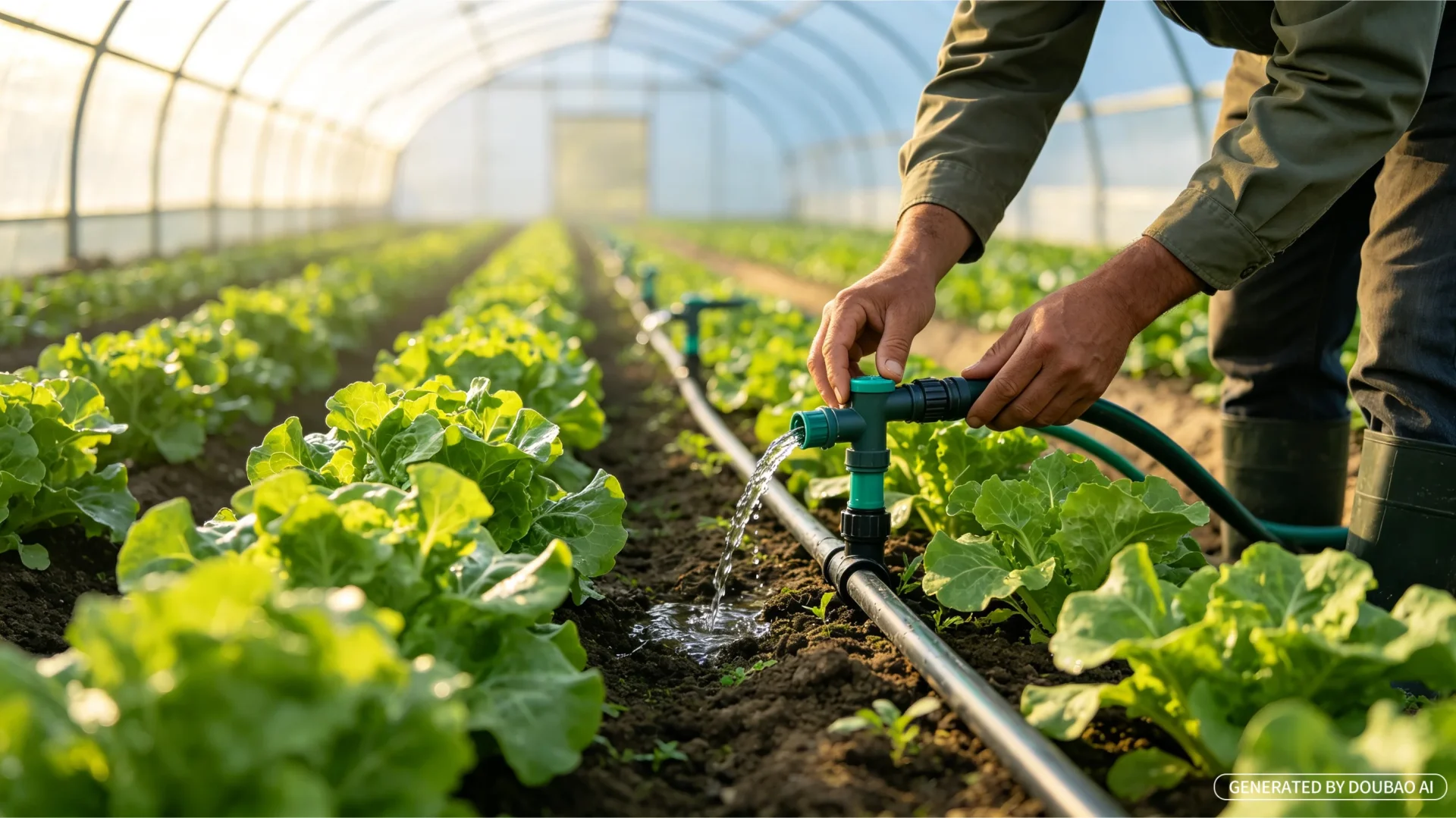
First, it never blocks irrigation equipment. Melted fertilizer liquid flows smoothly through drip tubes, sprayers and small sprinkler systems. Farmers spend less time cleaning tools. The irrigation equipment will last much longer.
Second, crops take in nutrients more easily with this fertilizer. Roots and leaves absorb dissolved nutrients directly. Crops use far more nutrients from this product than regular compound fertilizer. It cuts down wasted fertilizer and lowers farm costs.
Third, farmers can feed crops properly at different growth stages. You can adjust fertilizer strength for seedlings, blooming and fruiting periods. This simple feeding way avoids over-fertilization. It also keeps crops from lacking nutrients during key growth phases.
Common NPK Ratios and Their Suitable Scenarios
Different NPK mixes meet different plant growth needs. Picking the right ratio is the key to simple, scientific fertilizing.
Balanced Formula (20-20-20, 18-18-18): This mix has equal amounts of three nutrients. It supplies full nutrition for nearly all young crops. It helps seedlings grow strong stems, green leaves and healthy root systems. Farmers often use it for field crops, young fruit trees and vegetable seedlings.
High-Nitrogen Formula (30-10-10): This nitrogen-rich mix speeds up leaf growth. It works well for leafy greens, lawns and young seedlings. Do not use it when crops bloom or bear fruit. It will make crops grow too many extra leaves. These extra leaves will reduce fruit output.
High-Phosphorus Formula (10-30-20): This formula has more phosphorus to build strong roots and flower buds. It is the best choice before transplanting and blooming. It helps more crops survive and grow more flowers.High-Potassium Formula (15-5-30): Fertilizer rich in potassium makes fruits bigger, brighter and sweeter. It fits tomatoes, grapes and strawberries well. All fruit trees need this mix in their late growth stage. It improves fruit quality and helps crops stand against dry weather and disease.

How to Choose NPK Fertilizer Based on Crops
Different crops need different nutrients as they grow. Matching fertilizer to your crop type is one of the fastest ways to improve farming efficiency.
Feed Leafy Vegetables Nitrogen All Season
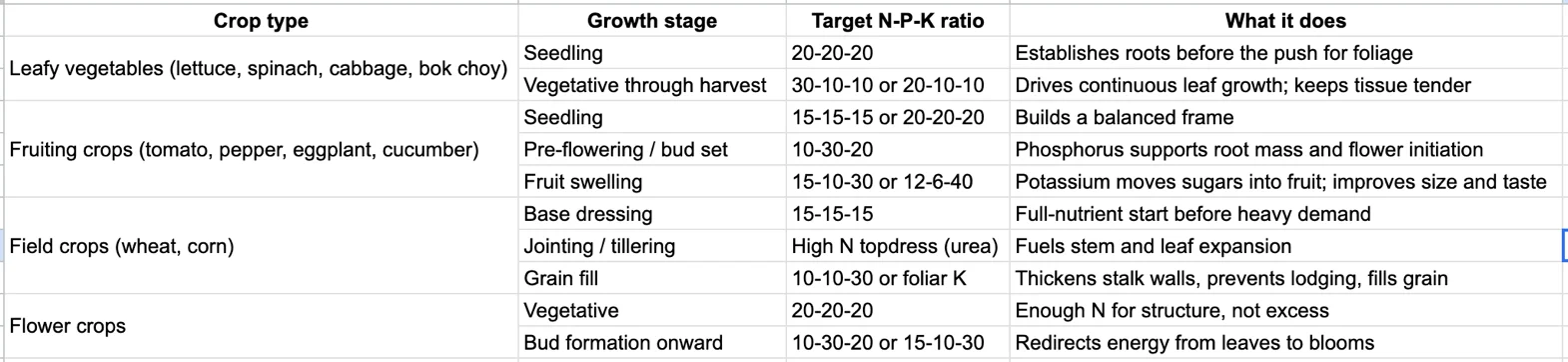
Use a high-nitrogen or balanced mix from transplant through harvest. Leafy crops build their value in foliage rather than fruit or grain, so nitrogen goes straight into the part you sell. Steady feeding keeps leaves tender and deep green instead of tough or pale.
Switch Formulas at Each Growth Stage for Fruiting Crops
Tomatoes, peppers, eggplant and similar crops need three different ratios in a single season: balanced at the seedling stage, high-phosphorus before flowering, high-potassium as fruit swells. Phosphorus supports root development and flower set; potassium moves sugars into the fruit. One fixed formula all season leaves a gap at every transition — and costs you both yield and flavor.
Start Field Crops Balanced, Finish Them High-Potassium
Wheat, corn and other grain crops take a balanced formula through early growth, then switch to high potassium later on. Potassium thickens stalk walls so plants stay upright in wind and rain, and it drives more assimilate into the grain. The result is fewer lodged plants and fuller, heavier kernels.
Hold Nitrogen Back on Flower Crops
Raise phosphorus and potassium, and keep nitrogen low. Excess nitrogen pushes plants into leaf growth at the expense of buds, leaving you with a large plant and few blooms. Limiting it redirects the plant’s energy toward flowering. NPK Quick Reference by Crop and Stage
NPK Quick Reference by Crop and Stage
Key Buying and Usage Considerations For Water-Soluble NPK Fertilizer
Many low-quality water-soluble fertilizers carry impurities and incomplete nutrients. They may block irrigation pipes and hurt crops. Buyers need to check these key points before buying.
Check full water solubility: Good water-soluble NPK melts fully in water with no sediment or floating waste. Low-quality fertilizer clogs drip lines and feeds crops unevenly.
Confirm clear NPK labeling: Official fertilizer products clearly mark exact nutrient ratios. Do not buy cheap fertilizer without clear labels. Unmarked fertilizer leads to nutrient shortages and unstable harvests.
Match formulas with growth stages: Do not use one single fertilizer mix for the whole growing season. Switch formulas as crops enter new growth stages. This is the secret to high yields and good crop quality.Control dilution concentration: Strong undiluted fertilizer liquid burns plant roots and leaves. Farmers must dilute fertilizer following product instructions before irrigation and spraying.
FAQs
Can water-soluble NPK completely replace traditional compound fertilizer?
No. Farmers usually use both fertilizers together to get the best planting results.
Is high-nitrogen NPK good for all growth stages?
No. High-nitrogen fertilizer only helps seedlings and leaf growth.
Will water-soluble fertilizer cause soil hardening?
High-quality water-soluble NPK has few harmful impurities. It will not harden soil. Low-quality fertilizer builds up salt in soil after long-term use..
How often should farmers apply water-soluble NPK fertilizer?
Use fertilizer every 7 to 10 days during fast growth for drip irrigation. Leave a 10 to 15-day gap between sprays for leaf feeding. Use fertilizer less often in cold seasons to avoid nutrient buildup in soil.
Can different types of water-soluble NPK be mixed for use?
We do not suggest mixing different NPK ratios randomly. Random mixing causes unbalanced nutrients and slows crop growth. You should use one single formula that matches your crop’s current growth needs.
Final Thoughts
Water-soluble NPK fertilizer is essential for modern accurate farm irrigation. Farmers only need to pick the right NPK formula. Match the formula to your crop types and growth stages. This simple step improves crop quality and raises farm profits.SUMEC Chemical is a professional supplier of chemical and fertilizer products. We provide reliable, high-quality water-soluble NPK fertilizers. You can check full product information here: https://sumecchemical.com/product/fertilizers/