

Granular vs Prilled Urea: Which Fertilizer Grade Should Buyers Choose?
Introduction
When farmers and fertilizer dealers buy urea fertilizer, most people only notice that all urea has 46% nitrogen. They think granular urea and prilled urea work exactly the same for crops. This idea is not right. Even though these two kinds of urea have the same chemical makeup, they are made in different ways. Their size, hardness, speed of dissolving, shipping performance and price all have clear gaps. If buyers pick the wrong urea type, they will face many hidden troubles. For example, lots of broken powder during transport, hard clumps after storage, uneven fertilizer spread on fields and less nitrogen taken in by plants. This blog will explain simple definitions, clear comparison points, real-use cases and full pros & cons of granular urea and prilled urea. It helps fertilizer importers, wholesale distributors, compound fertilizer factories and farm owners make smart buying choices.
Table of Contents
Basic Introduction: What Are Granular Urea and Prilled Urea
Cor Difference Quick Comparison Table
How Production Methods Create Big Differences Between the Two Ureas
5 Key Comparison Points for Granular Urea and Prilled Urea
Full List of Advantages and Disadvantages for Each Urea
Simple Rules to Help Buyers Pick the Right Urea
Conclusion
Reference Sources
Basic Introduction: What Are Granular Urea and Prilled Urea
What is Granular Urea
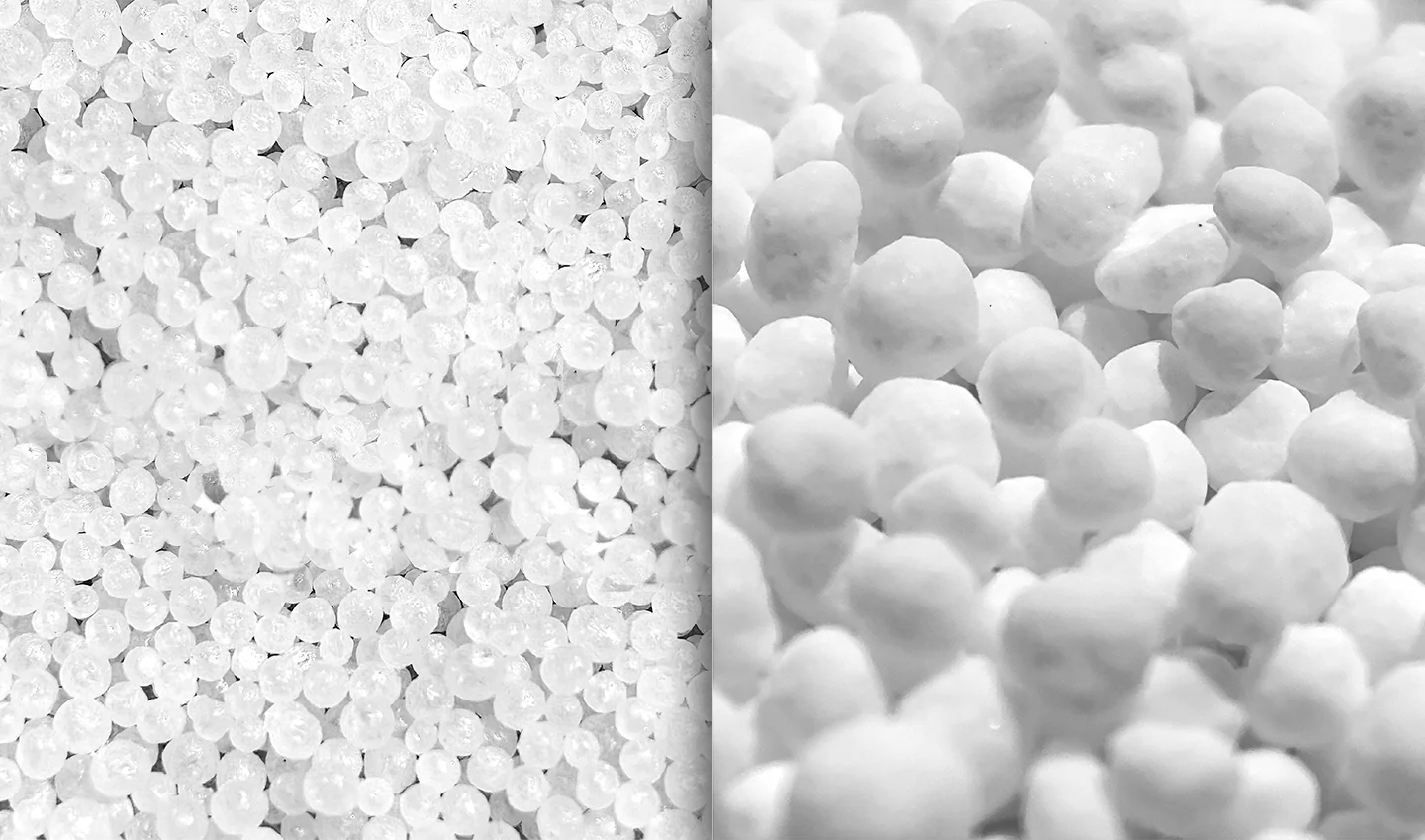
Granular urea is made by special rolling and granulating machines. Workers melt raw urea liquid, then roll and press it many times to form solid round grains. Each grain is 2 to 4 millimeters wide. These grains are thick, heavy and hard to break. Inside every granular urea grain, the structure is tight and solid.
Around the world, this urea is widely traded for large farms that use big farming machines. Many cross-border fertilizer importers love granular urea. It stays in good shape during long sea trips and damp storage rooms, according to the International Fertilizer Association (IFA, 2024).
What is Prilled Urea
Prilled urea relies on tall cooling towers for production. Factories spray hot melted urea liquid into tiny drops. The small drops fall slowly inside the tower and cool down into little round balls called prills. The size of prills ranges from 0.85 to 2 millimeters.
Prilled urea has a loose inner structure, so it breaks easily when squeezed or knocked. It dissolves very fast once it touches water. Farmers use it for drip irrigation and leaf spray fertilizer. Chemical factories also buy large amounts of prilled urea to make liquid chemical products (World Fertilizer Market Report, 2025).
Core Difference Quick Comparison Table
| Comparison Item | Granular Urea | Prilled Urea |
| Core Production Method | Rolled and pressed by granulation machines, multi-step forming | Cooled and formed in tall towers, one-step spraying molding |
| Typical Particle Size | 2–4 millimeters, large and uniform | 0.85–2 millimeters, small and light |
| Particle Hardness & Strength | High hardness, hard to break or crush | Low hardness, fragile, easy to crack into powder |
| Dissolving Speed | Slow, fully dissolves in 15–30 days in soil | Ultra-fast, fully dissolves in a few hours in water |
| Nitrogen Release Feature | Slow and steady release, long feeding time for crops | Quick burst release, instant nitrogen supply |
| Best Fit Application Scenarios | Large farm mechanical spreading, base fertilizer, long-distance shipping, long-term storage | Drip irrigation, leaf spray, quick top dressing, liquid chemical production, short-distance local sales |
| Base Purchase Price | Higher per-ton factory price | Lower per-ton factory price |
| Storage & Shipping Performance | Resists moisture and clumping, little breakage loss during transport | Easy to absorb water and form hard blocks, high powder breakage loss |
How Production Methods Create Big Differences Between the Two Ureas
The biggest differences between granular urea and prilled urea start from their production steps.
Prilled urea only needs one cooling tower to finish forming. The whole process is simple and fast. Factories spend less energy and labor to make it. So its base selling price is lower.
Granular urea needs extra rolling, pressing and drying steps. More machines and longer working time push up production costs. That is why granular urea always costs more per ton at the factory gate.
Their physical features also separate them a lot. Granular urea grains are bigger and harder. When trucks or ships carry the fertilizer, rubbing and hitting do not turn them into fine powder. Prilled urea’s small prills crack easily after one or two times of loading and unloading. All the broken tiny powder soaks up water quickly in wet warehouses and sticks into hard blocks.
Besides, their dissolving speed is totally different. Prilled urea fully melts in water within a few hours. Granular urea melts little by little in soil over 15 to 30 days, and feeds crops nitrogen slowly for a longer time.
5 Key Comparison Points for Granular Urea and Prilled Urea
I. Use on Farms: Nutrient Dissolving & Crop Growth Effects
The way fertilizer works on farmland is the first thing buyers need to think about.
Granular urea fits large farm spreading machines perfectly. All grains have similar weight. When machines spread fertilizer on wide fields, wind cannot blow the grains away easily. Every part of the farm gets the same amount of nitrogen. It releases nutrients slowly, so less nitrogen gas escapes into the air on hot summer days. Farmers use it as base fertilizer for corn, wheat and fruit trees that grow for many months. A farm test report from University of Minnesota Extension (2024) shows granular urea cuts nitrogen loss by nearly 20% compared with prilled urea on open farmland.
Prilled urea dissolves super fast and gives nitrogen to plants right away. It works well for quick top dressing, drip irrigation and leaf spray. Leafy vegetables like lettuce and spinach need fast nitrogen to grow bigger, so prilled urea is the better choice here. But prills are light. Wind will blow them to one side when machines spread them. Crops in some areas get too much nitrogen, while others get too little. If farmers do not cover prilled urea with soil fast, lots of nitrogen will vanish into the air.
II. Mixing with Other Fertilizers for Compound Blends
Many buyers run factories that mix nitrogen, phosphorus and potassium together to make BB fertilizer. For these businesses, granular urea is much more useful.
Granular urea’s grain size matches granular phosphate and potash fertilizer. After mixing, shaking and long-distance transport, different fertilizer grains do not separate. Every bag of finished mixed fertilizer keeps balanced nutrition for crops.
Prilled urea’s tiny balls are much smaller than phosphate and potash grains. During transport and storage, small prills sink to the bottom of storage piles. The nutrient ratio in each fertilizer bag becomes uneven. Customers will complain about bad fertilizer effects, and factories may lose orders. Only small batches of liquid fertilizer can use prilled urea without segregation problems.
III. Storage, Loading and Long-Distance Shipping Performance
Shipping and storage waste takes away buyers’ profits. Granular urea has clear advantages here.
If buyers import urea across oceans, transfer goods between many cities, or store fertilizer for more than three months in rainy seasons, granular urea rarely breaks into powder. Even in warm, humid coastal warehouses with simple plastic cover storage, it stays loose and easy to pour out.
Prilled urea brings many troubles during circulation. Every time workers load or unload the goods, a lot of prills break into fine dust. The dust blocks transport belts and causes weight loss for buyers. In damp weather, the powder absorbs water and turns into hard solid blocks. Workers need extra time and labor to crush the blocks before selling. Only local short-distance delivery and dry storage rooms can reduce these problems of prilled urea.
IV. Market Price and Total Cost for Buyers
At first sight, prilled urea has a cheaper per-ton price, which attracts buyers who want to cut short-term spending. But buyers should calculate all costs instead of only looking at factory prices.
Granular urea’s higher buying price gets balanced by fewer losses during shipping, less labor to break hard blocks in warehouses, and fewer customer complaints. Shops and large farms also accept granular urea at a slightly higher selling price, so dealers earn more profit in the long run.
Prilled urea’s low upfront cost often leads to hidden extra fees: weight loss from broken powder, extra worker wages for processing clumpy fertilizer, and rejected orders from compound fertilizer factories. The Global Fertilizer Trade Analysis (2025) points out that long-chain importers usually gain 8% to 12% higher total profit by choosing granular urea.
VI. Uses as Raw Materials for Industrial Factories
Besides farming, two urea types serve different industrial factories.
Prilled urea dissolves quickly, so it is the main raw material for liquid nitrogen fertilizer, vehicle AdBlue liquid and chemical resin production. Factories that need fully melted urea in water systems mostly buy prilled urea.
Granular urea melts slowly. It will slow down production speed for liquid chemical goods. Only a small number of solid chemical processing factories use granular urea as raw material.
Full List of Advantages and Disadvantages for Each Urea
Advantages of Granular Urea
- Hard grains do not break easily; little powder waste during long shipping
- Resists moisture and clumping; safe to store for many months
- Matches farm spreading machines and mixed fertilizer production; nutrition stays balanced
- Releases nitrogen slowly; less nutrient waste, better crop absorption
- Steady demand from big farms and blending factories; stable sales channels
Disadvantages of Granular Urea
- Higher production cost means higher purchase price
- Slow dissolving speed; not good for emergency top dressing and drip irrigation
- Cannot work well as raw material for liquid chemical factories and car urea production
Advantages of Prilled Urea
- Lower factory price, good for buyers with tight short-term budgets
- Dissolves rapidly in water; perfect for drip irrigation, leaf spray and liquid chemical production
- Small prills flow smoothly for small farmers who spread fertilizer by hand
- Sells to both farm markets and chemical factories; two separate sales channels
Disadvantages of Prilled Urea
- Fragile prills break easily; lots of powder waste after repeated transport
- Absorbs water fast and forms hard blocks in humid storage
- Grain size does not fit phosphate and potash; mixed fertilizer separates during transport
- Blows away easily in wind during large machine spreading; uneven nutrition on fields
Simple Rules to Help Buyers Pick the Right Urea
Choose granular urea if your business matches any of these situations:
- Your main customers are large farms with automatic fertilizer spreading machines
- Your core business is making mixed NPK compound fertilizer
- You import urea over seas, transport goods across many cities, or store fertilizer over 3 months
- Your local area has high rainfall, damp air and poorly ventilated warehouses
- You want to cut shipping waste and reduce customer complaints
Choose prilled urea if your business meets the following standards:
- Most buyers are small farmers who use manual top dressing, drip irrigation and leaf spray
- Your downstream clients are chemical factories and AdBlue liquid producers
- You only deliver goods to nearby towns with one single loading step and dry storage rooms
- You buy and sell urea quickly without long-term stockpiling, and low purchase cost is your top goal
Conclusion
Granular urea and prilled urea contain the same 46% nitrogen, but their physical features decide where they can be used and how much total cost buyers will spend. There is no single “better” urea for every buyer. The right choice depends on your customer types, transport distance, storage environment and fertilizer usage ways.
For cross-border importers, mixed fertilizer factories and large agricultural wholesalers with long supply chains, granular urea brings stable product quality and steady long-term profits. For suppliers selling chemical raw materials, small-farm irrigation fertilizer and local short-distance retail, prilled urea shows clear advantages in price and dissolving speed. Before signing large urea purchase orders, buyers should check their downstream demand and storage logistics conditions first. This step helps avoid extra losses caused by choosing the wrong urea grade.
Reference Sources
1. International Fertilizer Association (IFA). 2024. Global Urea Production & Physical Property Guide
2. University of Minnesota Extension. 2024. Field Test: Nitrogen Loss of Granular and Prilled Urea
3. World Fertilizer Market Report. 2025. Global Urea Trade & Cost Analysis
4. Global Fertilizer Trade Analysis. 2025. Full-cycle Cost Comparison of Two Urea Grades