

Ethane Dehydrogenation: The Technology Everyone Is Betting On, But No One Has Fully Cracked
Here’s a number that keeps chemical engineers up at night: 2.3 billion tons. That’s annual global ethylene capacity, and nearly 45% of it now comes from ethane. Sounds like a success story, right? Except that the chemistry behind it is brutally inefficient. Ethane dehydrogenation is endothermic. Very endothermic. At 600°C, thermodynamic equilibrium caps conversion at around 40%. To push past that, plants have been cranking temperatures above 1000°C for decades. That burns fuel, fouls catalysts with carbon, and forces shutdowns every few weeks for regeneration. The industry has tolerated this because ethane from shale gas was cheap. But cheap feedstock doesn’t fix a bad process. It just delays the reckoning.
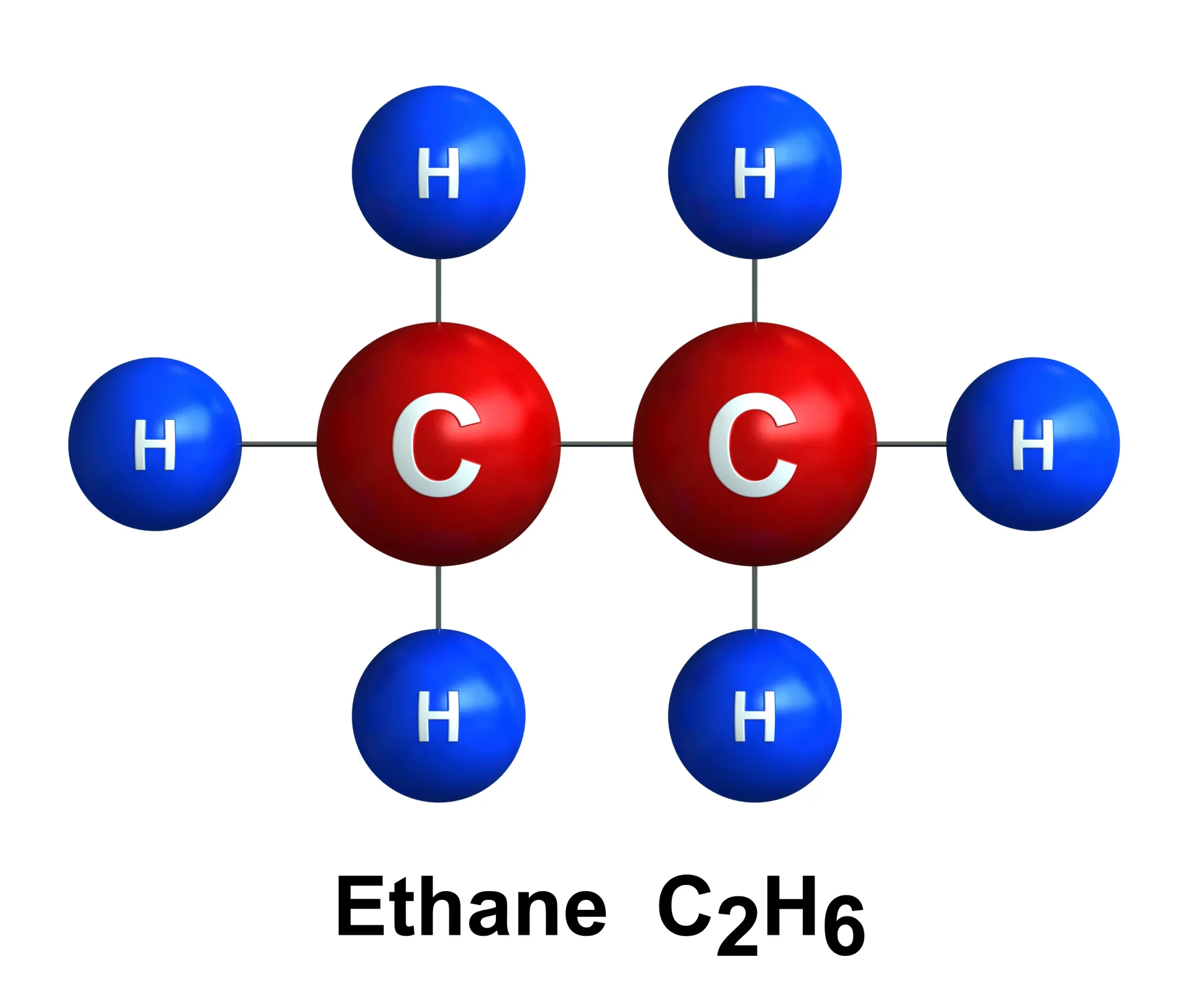
So what’s actually new in 2026? Not incremental tweaks. Three completely different approaches are now competing for dominance, and each comes with its own set of headaches.
Take photocatalysis. The idea sounds elegant—use sunlight to break C–H bonds at room temperature, skip the furnace entirely. A team from East China University of Science and Technology recently showed something interesting in Nature Communications. They built adjacent [Cu–O] atomic pairs on plain TiO₂ surfaces, nothing exotic. The copper atoms trap photogenerated holes and direct them to attack ethane’s carbon-hydrogen bonds. Meanwhile, the oxygen neighbor handles the beta-hydrogen elimination step. But here’s the clever part: they pumped CO₂ into the system to scavenge accumulated surface hydrogen. That single move stopped the usual poisoning effect and kept the catalyst running for extended periods. Ethylene selectivity? Near total. No over-oxidation, no coke. Sounds like a breakthrough. But scale it up? Not yet. The quantum efficiency in their setup was measured under carefully controlled lab light, not real sunlight on a cloudy Tuesday afternoon. And no one has built a photoreactor that can handle ethane gas at industrial flow rates. The gap between 6.25 mmol·g⁻¹·h⁻¹ and the 10+ tons per hour that a cracker produces is not a gap—it’s a canyon.
Meanwhile, the electrochemistry crowd is making noise with protonic ceramic electrolysis cells. A Beijing Institute of Technology group pushed ethane conversion to 55.48% at 700°C and 1.8 V, with ethylene holding at 93.6% selectivity. That conversion number actually exceeds the thermal equilibrium limit. How? Because the electrolytic cell continuously pulls hydrogen away from the product side—it’s like sucking the reaction forward. They used a Ruddlesden-Popper phase material that exsolves bimetallic nanoparticles right on the anode surface during operation. In plain English: the catalyst grows its own active sites while running. No pre-deposition, no complicated synthesis. Another variant with zirconium doping hit 0.87 A/cm² current density. Impressive on paper. But electrolysis at 700°C still needs external heat and stable power. And those ceramic membranes are notoriously brittle. Thermal cycling, start-up, shut-down—these are real operational nightmares that lab papers don’t discuss. One engineer I talked to put it bluntly: “Great for a Ph.D. thesis. Hell for a plant manager.”
Thermal catalysis isn’t dead either. It’s just getting smarter. Wuhan University’s team ran a chemical looping setup where dehydrogenation and hydrogen combustion happen in the same reactor but on different materials. CoOx/HZSM-5 cracks the ethane, and CeBiOx selectively burns the generated hydrogen—without touching ethane or ethylene. At 600°C, they hit 40% conversion and 80% selectivity, with over 75% of hydrogen consumed in situ. This sidesteps the equilibrium constraint without adding pure oxygen, which makes it safer than conventional oxidative dehydrogenation. But chemical looping reactors are mechanically complex. Solids have to circulate between zones, and attrition wears down particles over time. The longest test run so far lasted only a few hundred hours. Industry wants years. So while the chemistry works, the hardware still lags.
Then there’s the commercial front, where Clariant and Linde are pushing their EDHOX™ process. This one is already out of the lab. Operating below 400°C, it cuts energy consumption by roughly 70% compared to steam cracking. It also produces glacial acetic acid as a co-product, which sells. That dual-output model changes the economics entirely. Capital expenditure drops 5-20% for new builds. Those numbers have gotten executives’ attention. But EDHOX™ demands high-purity ethane feedstock. It also requires meticulous oxygen handling. Any leak, any miscontrol, and you’re looking at explosive mixtures. The safety systems add cost and complexity that don’t show up in press releases. And despite the low temperature, catalyst selectivity still isn’t perfect—some ethane inevitably burns to CO₂, wasting feedstock.
Here’s something that rarely makes it into headlines: our kinetic models are wrong. A recent paper in ACS Catalysis dropped a quiet bombshell. The Pt-Sn/ZnAl₂O₄ system—one of the most studied catalysts in ethane dehydrogenation—does not follow Langmuir adsorption kinetics. The assumption that everyone has used for reactor design? Off by nearly 20% in hydrogen extraction efficiency. That means existing membrane reactor simulations have been overly optimistic. Equipment sizing, purge gas flow, compressor specifications—all of it may need recalibration. This is the kind of unglamorous correction that doesn’t win grants but saves or costs millions in real plants.
So where does all this leave us? Not with a clear winner. Photocatalysis has the lowest temperature but the worst scalability. Electrolysis offers conversion above equilibrium but demands heat, power, and fragile ceramics. Chemical looping nails selectivity but suffers from solids handling. EDHOX™ is commercially closest but carries safety baggage and feedstock constraints. Each path solves one problem while creating another.
What’s actually happening on the ground? Pilot plants are being planned or built for all four routes. China has tendered several hundred-ton-scale photocatalytic demonstration units for 2026 construction. Europe is betting on electrified reactors paired with renewable power. The U.S. and Middle East, sitting on cheap ethane, are leaning toward EDHOX™ retrofits. But pilot data won’t be ready until late 2027 at the earliest. Until then, the industry is placing bets without full cards.
One question nobody has answered yet: what happens to existing steam crackers when these new technologies mature? Write-offs? Conversions? Stranded assets? The capital sunk into conventional plants is enormous. No board of directors will abandon a functioning cracker just because a lab-scale photoreactor hit 100% selectivity. The transition, if it comes, will be slower than the hype suggests.
Ethane dehydrogenation is not a solved problem. It’s a collection of half-solutions, each promising and flawed. The next 18 months of pilot data will separate real contenders from academic curiosities. Until then, the smart money watches, waits, and runs the numbers again.