

Introduction and Application of Monoammonium Phosphate (MAP)
Basic Product Overview
Monoammonium Phosphate, abbreviated as MAP, chemically named ammonium dihydrogen phosphate with the molecular formula NH₄H₂PO₄, is a water-soluble inorganic chemical raw material widely used in agriculture, industry, food processing and other sectors. It is generally supplied in agricultural grade and high-purity industrial grade. Most products appear as white crystalline granules or powder. They maintain relatively stable properties under normal temperature and are unlikely to absorb moisture and cake heavily, bringing relatively convenient storage and transportation.
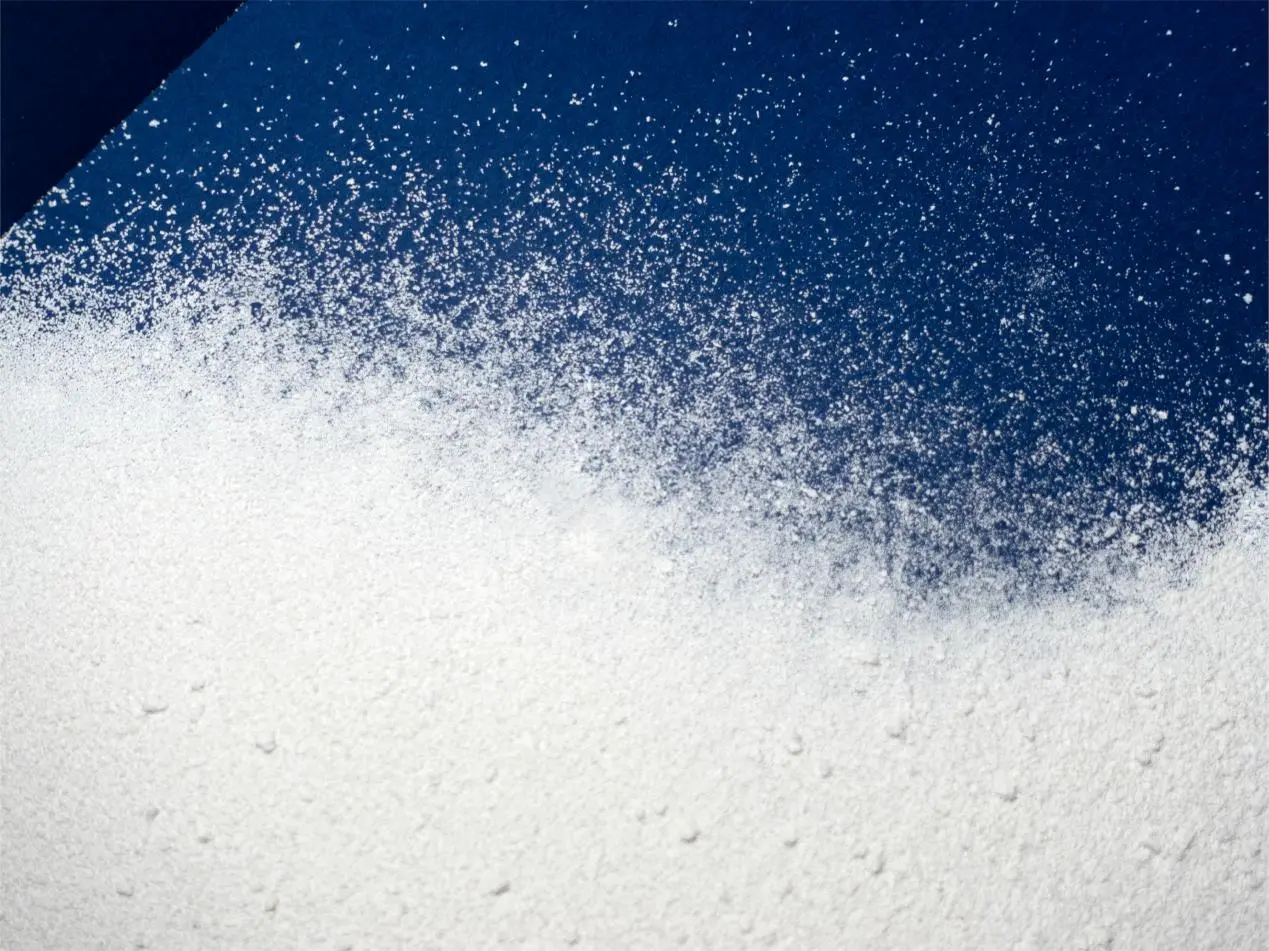
The product dissolves readily in clean water. Its 1% aqueous solution shows weak acidity with a pH value between 4.2 and 4.5. It is slightly soluble in ethanol and barely soluble in organic solvents such as acetone. When heated to around 190℃, it may decompose gradually and release ammonia and water vapor, a property that makes it suitable for flame retardant-related processing. Nutrient indicators vary by grade: agricultural MAP contains roughly 10%–12% nitrogen and 44%–52% phosphorus pentoxide, while high-purity industrial MAP can reach a phosphorus content of 61% with stricter control over impurities and heavy metals, fitting fine chemical production. With a high-phosphorus nitrogen-phosphorus ratio, it can provide steady phosphorus and nitrogen supply for crops, chemical synthesis and microbial cultivation, delivering relatively strong overall compatibility.
Core Agricultural Applications
Agriculture accounts for a relatively large share of MAP consumption. It can be applied directly as base fertilizer or seedling topdressing, and often serves as a raw material for compound fertilizers, water-soluble fertilizers and bulk blended fertilizers. It dissolves at a relatively fast rate, releasing ammonium nitrogen and phosphate that can be easily absorbed by crop roots. Commonly used for grain crops including rice, wheat and corn, as well as fruits, vegetables, saplings and economic forest seedlings, it helps boost fibrous root growth and flower bud differentiation, and may improve crops’ tolerance to cold and drought to a certain extent.
With weakly acidic aqueous solution, MAP can slightly neutralize saline-alkali soil and reduce the chance of phosphorus being immobilized by metal ions in soil. It works well for alkaline soil in northern regions and drip irrigation integrated water and fertilizer systems, and seldom blocks drip pipes under normal mixing ratios. Application dosage can be adjusted according to soil fertility and crop varieties. The dosage can be appropriately reduced for phosphorus-sensitive crops to avoid nutrient imbalance.
Diverse Industrial Chemical Uses
MAP is a common auxiliary material for ABC dry powder fire extinguishing agents, fire-resistant coatings and flame retardant boards. During high-temperature decomposition, it absorbs heat and releases water vapor to form a barrier layer on combustible surfaces, which may slow fire spread. It is often added into wood, paper, textile fabrics and building thermal insulation materials to help improve their fire resistance. It also acts as a key intermediate for synthesizing long-term flame retardant ammonium polyphosphate.
When diluted and formulated, MAP can be made into phosphating solutions. After steel, castings and auto parts are soaked in the solution, a uniform phosphate protective film may form on metal surfaces, slowing down oxidation and rusting and enhancing adhesion of subsequent paint and electroplating coatings, widely supporting machinery processing and hardware manufacturing.
In dye and fiber processing, it can function as a dispersant to reduce pigment agglomeration. It is used as a glaze regulator in enamel and ceramic production to improve glaze flatness, and serves as a buffer auxiliary in printing to stabilize the pH of production systems. High-purity grades can also be applied in small amounts for electronic cleaning and battery raw material preparation and other fine chemical processes.
Food, Feed and Other Supporting Applications
Food-grade MAP complying with national standards can be used within limited proportions as leavening aids and yeast nutrients in baking. It supplies phosphorus and nitrogen for fermenting microbes to improve dough fermentation performance. Small amounts can also be added in brewing to adjust the pH of fermentation systems and support microbial activity.
In feed processing, it acts as a mineral additive for livestock and aquatic feeds to supplement phosphorus required for animal growth and assist bone development. The addition amount should match the nutritional formula standards of different breeding varieties. Besides, it has moderate usage demand in laboratory chemical reagents and water treatment buffer agents.
Brief Tips for Usage and Storage
MAP boasts relatively good general compatibility, yet long-term mixed storage with high-calcium and high-magnesium raw materials is better avoided to prevent precipitation that may affect usage effects. Storage spaces are recommended to be dry, ventilated and separated from strong alkaline materials. Different grades come with distinct indicators. Agricultural fertilization, industrial flame retardancy and food processing should adopt matching grades, and addition ratios shall follow industrial specifications to better exert the product’s performance.
Overall, with stable water solubility, balanced nitrogen-phosphorus supply and flame retardant buffering properties, MAP can meet basic production demands across multiple industries. As a general phosphorus-based chemical raw material with relatively good cost performance, it maintains steady application prospects in modern agriculture, fire protection, metal processing and other industries.