

Acrylate Esters Market Navigates Capacity Expansion and Regional Realignment
If you follow the chemicals sector, you have probably noticed that the acrylate esters market has been anything but quiet in 2026. Between new plant startups in China, supply hiccups in Europe, and changing demand patterns in coatings and adhesives, producers are having to rethink their strategies on the fly.
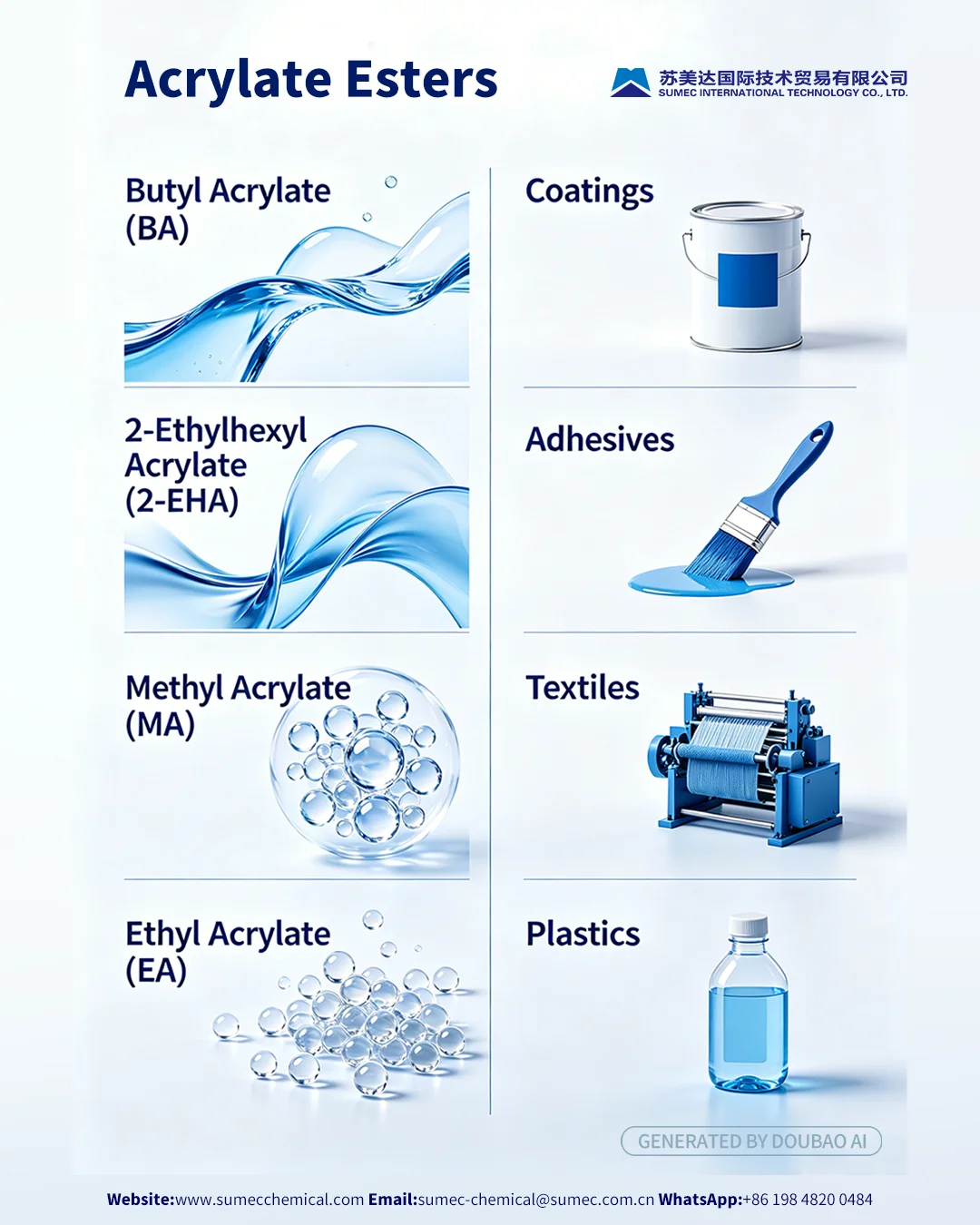
Let us start with supply, because that is where the action is right now. Over in East Asia, a wave of new capacity is coming online. BASF is pushing ahead with its Zhuhai project – actually, the Zhanjiang Verbund site – where they are building a new acrylic acid complex. Once finished, it will add half a million tons of annual capacity, split between butyl acrylate and 2-ethylhexyl acrylate. The point is not just to produce more. It is to put production right next to the customers who need it, particularly in the Chinese coatings and adhesives markets. For local buyers, that means shorter lead times and lower freight costs.
Meanwhile, Europe is seeing a very different picture. Margins have been squeezed, and not everyone is happy about it. The arbitrage window that once allowed cheap Asian material to flow into northwest Europe has mostly closed. Prices are not far enough apart to make the shipping worth it. On top of that, Europe has lost some local production. Trinseo’s 100,000-ton plant in Italy went offline, and that removal of supply has tightened things up. That said, material from the Middle East – produced at relatively low cost – is still finding its way into European ports, which keeps any price spikes in check.
Across the Atlantic, the US market is mostly waiting for a signal. A lot of acrylate esters go into architectural paints, which means housing activity drives demand. Right now, interest rates are keeping homebuilders cautious. Until the Fed signals a clear shift, nobody expects more than low single-digit demand growth. It is not a collapse, but it is not a boom either.
India, by contrast, is in the middle of a structural shift. Indian Oil recently started up its new butyl acrylate plant, and that has changed the game for the subcontinent. Before, India imported most of what it used. Now, with domestic capacity hitting 280,000 tons per year and consumption running at maybe 300,000 to 330,000 tons, local production can cover three-quarters of demand. Spot prices have dropped to levels not seen since before the pandemic. That is good news for local buyers, but it is forcing international suppliers to look elsewhere for volume.
On the demand side, the old hierarchy still holds in some ways. Paints and coatings remain the biggest outlet for acrylate esters, taking somewhere between 27% and 36% of total consumption depending on how you measure it. But the fastest growth is happening elsewhere. Adhesives and sealants are the real bright spot. Packaging is shifting toward flexible materials, and electric vehicle battery assembly needs high-performance bonding solutions. Both trends work in favor of acrylate esters.
Sustainability is also becoming a real factor, not just a talking point. Regulations on volatile organic compounds keep getting tighter, and that is pushing the industry toward waterborne acrylic technologies. BASF has already launched what it calls “RE” grades of butyl acrylate and 2-ethylhexyl acrylate – basically products made with renewable energy, aimed at helping customers reduce their Scope 3 emissions. Bio-based acrylates are also getting more attention, though they still struggle on cost compared to traditional petrochemical routes.
What does all this mean for the rest of 2026? Expect more divergence between regions. Asia-Pacific will likely see solid volume growth, supported by the new local production. Europe and the US will have a tougher time, with weak manufacturing activity squeezing margins. For suppliers, the smart move is to move away from commodity-grade esters and toward specialties – things like medical adhesives or electronics coatings where value matters more than price. And as production shifts to China and trade routes change, being able to move supply quickly will be what separates the winners from the rest.