

GAC Launches New Multimodal Transport Supervision Model to Boost Efficient and Smooth International Logistics
Recently, the General Administration of Customs (GAC) announced the expansion of pilot programs for two multimodal transport supervision models, namely sea-rail intermodal transport and water-water transshipment for import and export goods, building on previous trial experience. The initiative aims to further support the high-quality development of multimodal transport, enhance the customs clearance facilitation of international multimodal transport goods, and propel China’s cross-border logistics system toward greater efficiency, intelligence, and green development. As a key link in building a modern comprehensive transportation system, multimodal transport is increasingly becoming an important means to stabilize foreign trade supply chains, reduce logistics costs, and enhance international competitiveness.
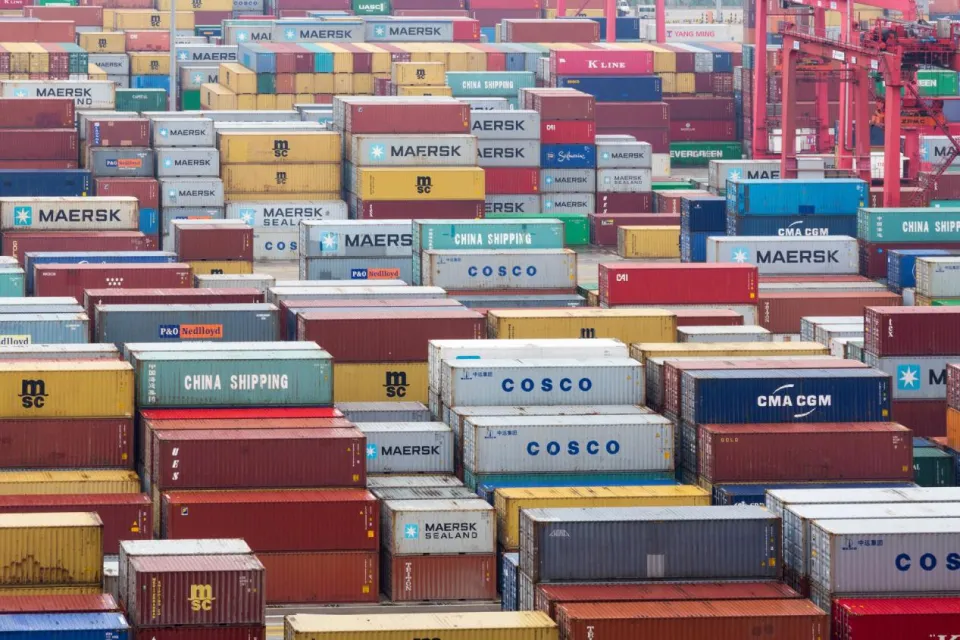
Multimodal transport refers to a service that relies on the seamless connection of two or more modes of transportation, including maritime shipping, railway, road, and inland waterway transport. It realizes one-stop entrustment, single-document throughout the process, and single-container door-to-door delivery of goods. Among these, sea-rail intermodal transport connects coastal ports with inland hinterlands, while water-water transshipment alleviates main port congestion and optimizes route resource allocation through efficient coordination between trunk ports and feeder ports. For a long time, the potential of multimodal transport has not been fully unleashed due to inconsistent supervision standards across different transport modes, complicated document flow, and information silos.
Under the new policy, enterprises participating in the pilot programs can enjoy convenient measures such as integrated declaration and intelligent inspection and release at designated ports. For example, in the sea-rail intermodal transport scenario, after goods are unloaded from overseas vessels at coastal ports, they can be directly loaded onto railway freight trains and sent to inland cities without repeated unpacking and inspection. In the water-water transshipment model, containers can achieve seamless customs clearance at hub ports by virtue of electronic manifests during transshipment. This not only greatly shortens the overall logistics time but also significantly reduces corporate compliance costs. More importantly, the model strengthens the GAC’s capability of visualized supervision over the entire logistics chain.
Multimodal transport not only meets the requirements of policy focus but also reflects that multimodal transport has evolved from a technical concept to an institutional arrangement and industrial consensus. In fact, in recent years, the state has intensively issued documents such as the Work Plan for Promoting Multimodal Transport Development and Optimizing and Adjusting the Transport Structure and the 14th Five-Year Plan for the Development of the Modern Comprehensive Transportation System. All these documents list multimodal transport as a core path to reduce costs and increase efficiency.
In terms of practical results, the initial pilot programs have achieved positive outcomes. Taking the China-Europe Railway Express assembly centers in Chongqing, Chengdu, Xi’an and other cities as examples, through the linkage with coastal ports to carry out sea-rail intermodal transport, the average customs clearance time of export goods has been shortened by more than 30%. After the implementation of water-water transshipment at ports along the Yangtze River, the turnover efficiency of feeder vessels has increased by nearly 20%. The expansion of the pilot scope by the GAC is expected to replicate the successful experience of multimodal transport to more regions and channels.
Of course, to truly realize the high-quality development of multimodal transport, collaborative efforts from multiple parties are still needed. In addition to GAC’s supervision innovation, departments such as transportation, commerce, and railway need to continuously deepen reforms in infrastructure connection, standard unification, and information sharing. Meanwhile, logistics enterprises should be encouraged to integrate resources, develop one-stop multimodal transport products, and improve market responsiveness.
Looking ahead, with the in-depth implementation of the RCEP and the steady advancement of the Belt and Road cooperation, China’s foreign trade will continue to have a growing demand for efficient, reliable, and low-carbon logistics channels. In this context, multimodal transport is not just a simple combination of transport modes, but a symbol of national logistics development. The GAC’s pilot program this time is a crucial step in promoting logistics transformation through institutional opening-up.In conclusion, the launch of the new round of multimodal transport supervision reform marks a solid step taken by China in building a safe, efficient, and green international logistics corridor. What we are witnessing is not only a technical optimization but also a systematic and in-depth supply chain upgrade. Only by continuously advancing rule coordination, infrastructure connectivity, and service innovation can multimodal transport truly become a strategic fulcrum supporting the steady growth of foreign trade and serving the new development paradigm.