

Changes in International Logistics in 2025
Against the backdrop of profound adjustments to the global trade landscape, international logistics is undergoing a qualitative shift. It is moving from “traditional transportation” to “supply chain hub”.
In the second half of 2025, the volume of China-Europe freight trains hit a new high. Cross-border routes kept expanding. Enterprise layouts evolved at a faster pace. Coupled with digital and green policy drivers, the industry achieved breakthroughs on multiple fronts.
Below is a summary of the most noteworthy recent industry dynamics and trend changes.
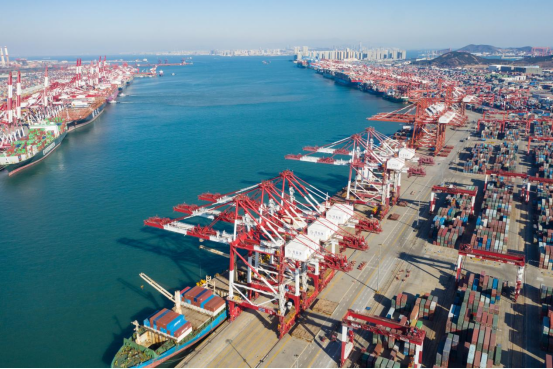
Cross-Border Corridors Upgraded Again: Sea, Land, Air and Rail Synergize
1. China-Europe Freight Trains Accelerate, Driving Industrial Chain Growth
As a core cross-border logistics corridor, China-Europe freight trains have seen many highlights recently.
- The Erenhot Port in Inner Mongolia handled over 3,500 trains in 2025. It was the highest annual volume in 13 years.
- 74 routes connect more than 70 hub stations across over 10 countries.
- The proportion of high-value goods, such as new energy vehicles and electronic products, has risen significantly.
More importantly, the freight trains are evolving from a “transport corridor” to an “industrial link”.
- Ganzhou, Jiangxi, built a complete furniture industrial chain relying on China-Europe freight trains.
- Wood import time was cut from 3 months to 14 days. Comprehensive logistics costs dropped by 18%.
- It achieved “72-hour turnaround from raw wood to finished furniture exports”. Products are sold to 19 countries. Overseas orders exceed 5 billion yuan.
Zhengzhou, Henan, extended the benefits of freight trains to people’s livelihoods. Over 3,000 types of European goods are sold at imported commodity supermarkets in high-speed railway stations. They realize “same city, same quality, same price”. Silk Road flavors reach consumers directly.
2. Air Corridors Keep Expanding, Regional Linkages Deepen
Xinjiang ↔ Europe
Xinjiang Airport Group reached a cooperation intention with Turkish Airlines. It plans to launch a cargo route from Urumqi to Istanbul. Urumqi will become Turkish Airlines’ first cargo aircraft hub in Northwest China. It will further improve the “Xinjiang-Central Asia-Europe” air corridor. It helps Xinjiang’s international cargo and mail throughput exceed 100,000 tons in 2025.
China-Vietnam/China-India Routes Speed Up
SF Express launched targeted cross-border logistics products.
- “China-Vietnam Smart Express” relies on the Asian Highway Network. It provides stable door-to-door transportation. It fits the “China supply – Vietnam production – global distribution” industrial model.
- “China-India Express Airlines” operates over 40 all-cargo flights weekly. It covers four core cities in India. It solves logistics pain points for high-tech industry exports.
3. New Land-Sea Corridor Focuses on ASEAN, Cross-Border Road Transport Grows Explosively
Chongqing is a core hub of the New International Land-Sea Trade Corridor. It recently signed 21 logistics cooperation agreements with ASEAN. The agreements cover key projects such as agricultural product distribution and “Chongqing-made vehicle exports”. Malaysian seafood and Indonesian frozen products will enter the Chinese market via cross-border road shuttle services.
Data shows that from January to October, cross-border road shuttle services from Banan district exceeded 11,000 trips. Cargo value topped 15 billion yuan. They surged 200% and 450% year-on-year respectively. It has become a “golden corridor” connecting Western China and ASEAN.
Industry Consensus: Supply Chains Need “Win-Win and Resilience”
Future International logistics industry competition will focus on three dimensions: efficiency, resilience and sustainability. It requires building a digital foundation driven by data. It also needs to promote deep integration of logistics and industries.
Enterprises like COSCO Shipping and China Eastern Airlines Logistics shared innovative solutions for cross-border e-commerce and cold chain logistics. The advancement of ESG information disclosure standards will further guide the industry towards high-quality and sustainable development.
International logistics in 2025 laid the foundation for “global cargo connectivity” through corridor expansion. It opened up space for efficiency improvement through technological innovation. It defined the direction of high-quality development through green transformation.
In 2026, we expect these changes to deepen further. New corridors will become new arteries. New technologies will generate new efficiency. Green development will become the new norm. Resilience will become the new competitiveness.
For logistics enterprises, seizing the opportunities of standardization, greening and intelligentization will secure an advantageous position in the global supply chain restructuring. For every consumer, these changes will eventually translate into faster cross-border parcels, more eco-friendly product packaging and a wider range of global goods to choose from.